Safety Boot Ratings Explained: S1P vs S3 vs S7
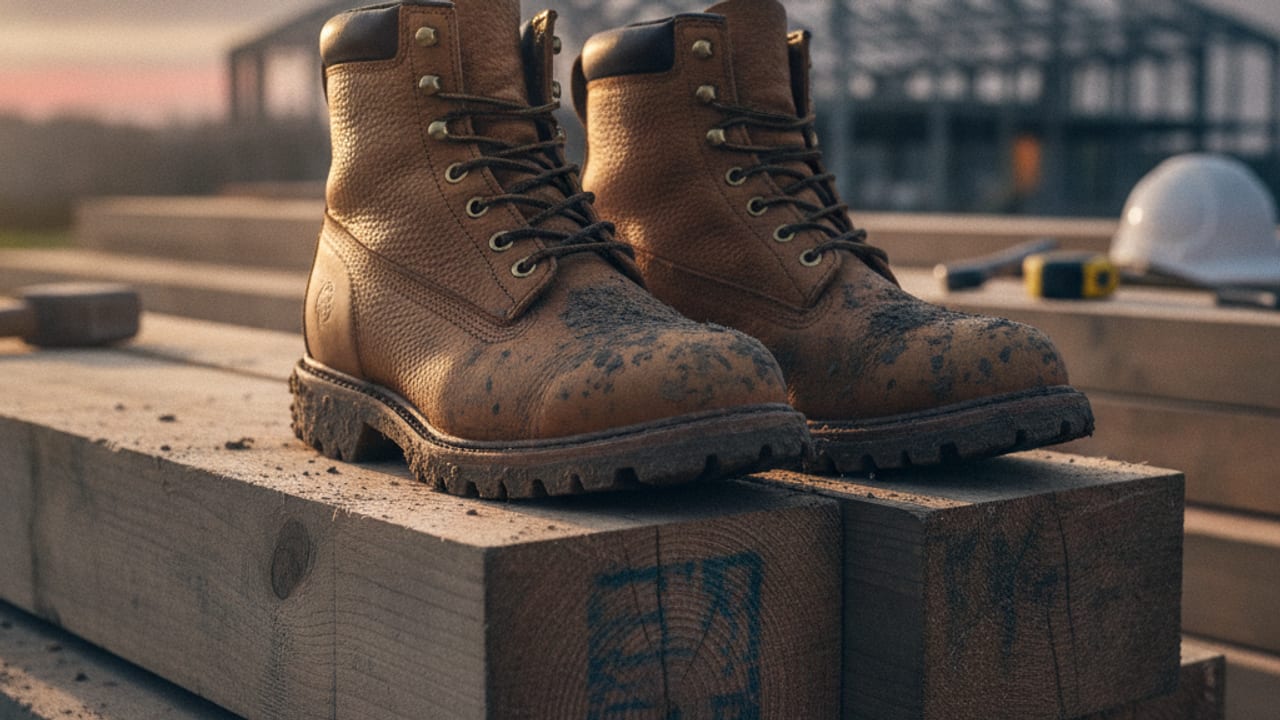
The short answer: every S rating starts with a 200 joule toe cap, then adds protection as the number climbs. S1P adds a penetration resistant midsole for dry indoor work, S3 adds a water resistant upper and cleated sole for general UK site work, and S7 adds whole boot water resistance for the wettest jobs. That is the core of it.
The longer answer is worth five minutes of your time, because the 2022 revision of the standard added new codes (S6, S7, PL, PS, SC) that are now appearing on boot boxes and confusing buyers, and because choosing the wrong rating either wastes money or leaves your feet exposed to exactly the hazard your site throws at them. Here is what every marking actually means, and which one your work genuinely needs.
The Standard Behind the Codes: EN ISO 20345
Every safety boot legally sold in the UK is certified to EN ISO 20345, the standard that defines what "safety footwear" means. Its one non negotiable requirement: a toe cap that protects against a 200 joule impact, roughly a 20kg weight dropped from a metre, plus a 15 kilonewton compression test. Whether the boot costs £30 or £200, if it carries an S rating, the toe cap meets the same test.
Everything else is layered on top of that baseline, and the S codes are shorthand for which layers a boot includes:
- SB: the basic grade. Toe cap only, with no promises about the rest of the boot. Rare on UK sites and usually not worth the small saving.
- S1: adds antistatic protection, an energy absorbing heel, a closed seat region (a proper heel enclosure, not a sandal back) and a fuel and oil resistant outsole. A dry conditions boot.
- S1P: everything in S1 plus a penetration resistant midsole, the layer that stops a nail going up through the sole. This is the trainer style boot you see on warehouse and joinery shop floors everywhere.
- S2: everything in S1 plus a water resistant upper, but no penetration resistant midsole. Common in food production and kitchens, less so in construction.
- S3: everything in S2 plus the penetration resistant midsole and a cleated outsole for grip in mud. This combination, toe cap, midsole, water resistant upper, treaded sole, is why S3 is the default boot on UK construction sites.
What Changed in 2022: S6, S7 and the New Small Print
The standard was revised as EN ISO 20345:2022, and boots certified to the new version are now the norm in UK merchants. The old ratings above carry over, but four changes matter to buyers.
- S6 and S7 are new. S6 is essentially S2 plus whole boot water resistance (the old WR marking baked into the rating), and S7 is S3 plus whole boot water resistance. The difference from a water resistant upper is real: S2 and S3 test the upper material only, while S6 and S7 test the finished boot, seams and all, so water cannot find its way in through the stitching.
- Penetration resistance got more honest. The classic P test uses a 4.5mm steel nail. The 2022 revision added PL and PS markings for non metallic midsoles tested with different nail sizes (PL with a 4.5mm nail, PS with a thinner 3mm nail). A thin nail can pass through some textile midsoles that stop a thick one, so if your site has a lot of loose fixings, a boot marked P or PL is the safer read.
- SC means scuff cap. A reinforced toe overlay for kneeling trades, tested for abrasion. Worth having if you spend your day on your knees laying floors or fitting kitchens.
- SR is the slip test. Slip resistance is now tested on ceramic tile with glycerol; older SRA/SRB/SRC codes are being phased out as stock certified to the 2011 version sells through. You will see both systems on shelves for a while yet, which is normal.
Know your rating? Our work boot guide compares S1P and S3 boots actually worth buying in the UK right now.
See the best work boots for UK tradesAll the Ratings at a Glance
| Rating | Toe cap | Midsole | Water resistance | Best suited to |
|---|---|---|---|---|
| SB | Yes | No | No | Minimal risk, occasional use |
| S1 | Yes | No | No | Dry indoor work, no nail risk |
| S1P | Yes | Yes | No | Warehouses, workshops, dry trades |
| S2 | Yes | No | Upper only | Food production, wet indoor floors |
| S3 | Yes | Yes | Upper only | General UK site work |
| S6 | Yes | No | Whole boot | Wet work without nail risk |
| S7 | Yes | Yes | Whole boot | Groundwork, civils, winter sites |
Steel vs Composite: Caps and Midsoles
The rating tells you what a boot protects against, not what it is made from, and the material choices change how the boot feels all day.
Toe caps
Steel caps are cheap, thin and utterly proven, but they are heavy and conduct the cold, which you notice by February. Composite caps (fibreglass, carbon or polymer) meet the same 200 joule test while cutting weight, and they do not chill your toes or set off metal detectors, which matters on airport and secure site work. The trade off is bulk, as composite caps are thicker to hit the same strength, so composite boots can look slightly rounder in the toe. Aluminium caps split the difference. None of these is safer than the others; the test is identical.
Midsoles
Penetration resistant midsoles come as a steel plate or a textile (often aramid) layer. Steel stops the standard test nail without argument but adds weight and stiffness. Textile midsoles flex more naturally, insulate better and cover more of the sole area, but quality varies, which is exactly why the PL and PS markings were introduced. An all composite boot, meaning non metallic cap and midsole together, is now common at trade quality and is the usual pick for anyone walking through scanners or working outdoors in winter.
Add on codes worth knowing
Two extras appear on spec sheets often enough to mention. M means metatarsal protection, a padded shield over the top of the foot for jobs with real crush risk from above, such as heavy blockwork or steel handling. AN means ankle protection, extra padding at the ankle bones for uneven ground and demolition. Both add weight and cost, so buy them for the hazard, not by default. You may also see HRO (heat resistant outsole) and CI (cold insulation) on boots aimed at hot works and winter civils respectively.
Which Rating Do You Actually Need?
Match the boot to the worst regular condition of your work, not the average day.
- Dry indoor trades (warehouse, workshop, electricians on second fix): S1P. You get the toe cap and nail protection without paying for waterproofing you will never use, in a lighter, cooler boot.
- General UK site work (carpenters, brickies, general builders): S3. The water resistant upper handles rain and morning mud, the cleated sole grips, and the midsole handles the fixings a live site drops. This is the rating most site rules quietly assume.
- Wet trades and groundwork (civils, drainage, landscaping through winter): S7, or a safety wellington for standing water. An S3 upper resists rain but soaks through eventually on a saturated site; whole boot water resistance is what keeps you dry at 3pm, not just 8am.
- Kneeling trades (floorers, kitchen fitters): look for the SC scuff cap on top of whichever rating fits your sites, because toe leather is always the first thing to go.
One point that outlasts every rating: the protection only holds while the boot is intact. A worn smooth outsole has lost the slip resistance it was certified with, a cracked or deeply cut sole can expose the midsole, and a toe cap that has taken one serious impact should be considered spent. When the tread is gone or the upper splits, the boot is no longer the boot on the certificate, whatever the label says. Most daily wearers get six to twelve months from a pair; replacing them is cheaper than a punctured foot.
We have compared the S1P and S3 boots that actually earn their keep on UK sites, from budget pairs to premium leather.
Read our best work boots UK guideFrequently Asked Questions
Is S3 better than S1P?
Not better, different. Both have the same toe cap and penetration resistant midsole. S3 adds a water resistant upper and a cleated outsole for outdoor ground, while S1P stays lighter and cooler for indoor work. Outdoors in the UK, S3 is the sensible default; indoors, S1P is usually the more comfortable choice for the same money.
Are composite toe caps as strong as steel?
They pass exactly the same 200 joule impact and 15 kilonewton compression tests, so at the certified level, yes. Steel is thinner and cheaper; composite is lighter, warmer in winter and invisible to metal detectors. Pick on comfort and job requirements rather than strength.
What does S7 mean on work boots?
S7 arrived with the 2022 revision of EN ISO 20345. It takes everything in S3 (toe cap, penetration resistant midsole, cleated sole) and adds whole boot water resistance, tested on the finished boot including seams. It effectively replaces the old habit of hunting for an S3 boot with a separate WR marking.
How often should safety boots be replaced?
When the tread wears smooth, the upper cracks or splits, or the boot takes a heavy toe impact, whichever comes first. For someone wearing them daily on site, that is typically six to twelve months. The certification describes the boot as it left the factory, and a worn out sole no longer delivers the slip or penetration protection on the label.