Best Work Boots UK 2026: Safety Boots That Go the Full Shift
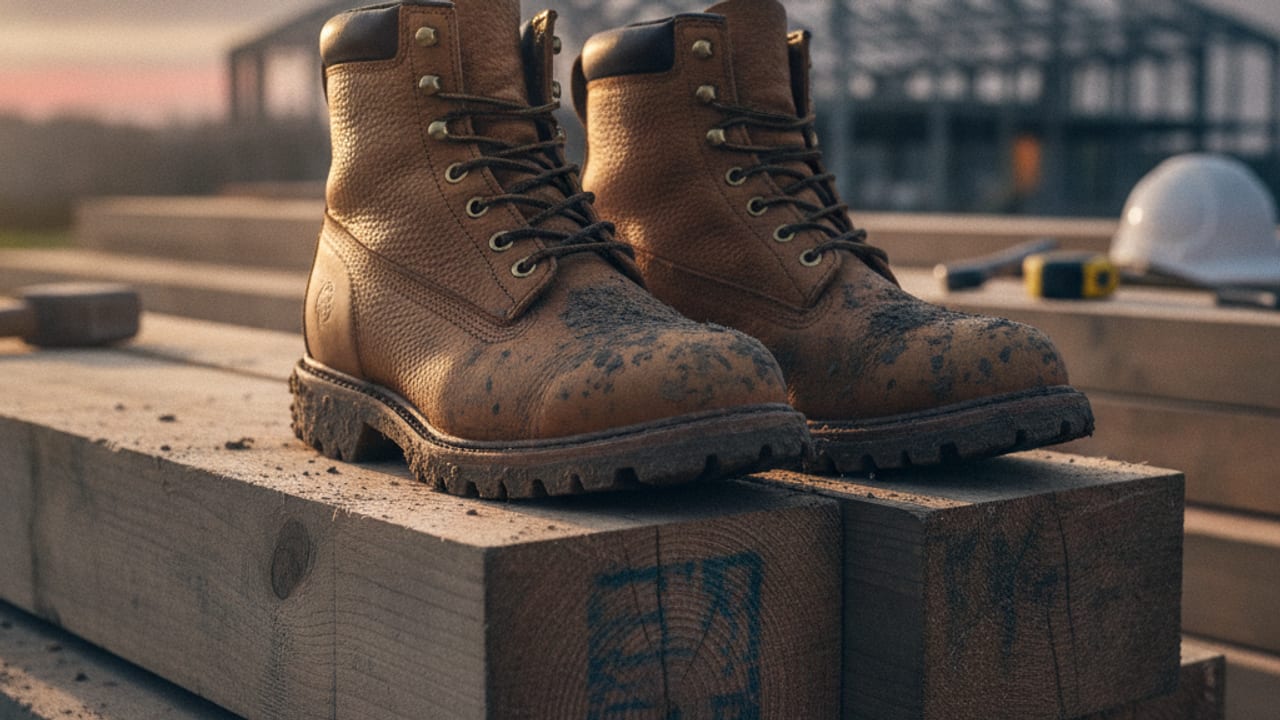
Nobody romanticises a work boot until the day a scaffold board, a dropped kerb stone or a four inch nail tests one. Between those moments, the same pair carries you across wet hardcore in January and baking felt roofs in July, and the difference between a good boot and a bad one is measured in how your feet, knees and back feel at seven in the evening. British weather and British sites are unkind to footwear, which is why the best work boots for this country need to balance three things at once: certified protection, comfort across a ten hour day, and leather and soles that survive more than one winter.
Below are six safety boots you can order on Amazon UK in 2026 with confidence, from a keenly priced site staple to a premium comfort specialist, each with its safety rating explained and its weaknesses stated plainly. We have left out the very cheapest boots on the market deliberately: sub £40 safety footwear exists, but the padding collapses and the soles wear slick within months, and around £55 is honestly where boots worth lacing begin.
Decoding the Safety Codes on the Box
UK safety footwear is certified under EN ISO 20345, and the letters and numbers on the box are a precise description of what you are buying. Four decisions cover almost everyone.
- Match the rating to your conditions, not the price tag. An S1P boot gives you the 200 joule toe cap, a puncture resistant midsole, antistatic protection and heel cushioning, but no weather protection, which makes it the right call for workshops, warehouses and dry interiors. S3 adds a water resistant upper and a cleated sole and is the sensible default for outdoor site work in Britain. The newer S7 classification goes further with whole boot water resistance for people who genuinely stand in the wet, such as groundworkers and drainage crews. Buying more rating than your work needs adds weight and money for nothing; buying less means wet feet or worse.
- Steel and composite toe caps protect equally, and differ everywhere else. Both must stop the same 200 joule impact, so safety is not the deciding factor. Steel is slim and famously durable but conducts winter cold straight to your toes and triggers metal detectors. Composite caps are lighter, thermally neutral and detector friendly, which is why they dominate the premium end. Across a long shift, most people who switch to composite do not switch back.
- The midsole is the protection people forget. A puncture resistant layer between sole and foot is what stands between you and the classic site injury: a nail through the boot. Steel midsole plates are tougher; modern textile plates are lighter, flex more naturally and cover a wider area of the footprint. Every S1P and S3 boot includes one, which is a strong reason never to wear ordinary trainers on site, whatever the job that day.
- Fit decides whether you actually wear them. Try boots, or size them, for the end of the day when feet are at their largest, and think honestly about cut. A mid or high cut steadies the ankle on rubble and ladders; a low trainer style boot runs cooler and lighter for flat, fast moving work. Slip codes such as SR on newer boots confirm the sole passed slip testing, worth a glance if smooth screed or wet tiles feature in your week.
All Six Picks at a Glance
| Pick | Rating | Toe cap | Typical band |
|---|---|---|---|
| DeWalt Douglas | S3 waterproof | Steel | £60 to £90 |
| Timberland PRO Hypercharge | S3 waterproof | Composite | £140 to £180 |
| JCB Workmax | S1P | Steel | £55 to £90 |
| Scruffs Switchback 3 | S1P (S3 variants exist) | Protective cap | £55 to £85 |
| V12 composite range | S1P and S3 models | Composite | £90 to £140 |
| CAT Powerplant | S3 | Steel | £70 to £110 |
Bands are typical Amazon UK prices at the time of writing, quoted as ranges because prices move often.
Our Six Picks for 2026
DeWalt Douglas S3 Waterproof Safety Boot
Best all round site boot for the money
The Douglas has quietly become one of the most common boots on British sites, and it earns that by covering every base a general trade needs without a premium price. The waterproof leather upper and membrane keep out the weather S3 demands, the steel toe cap and puncture resistant midsole handle the sharp end of site life, and the outsole grips well on mixed ground while shrugging off warm surfaces. The mid height cut braces the ankle without feeling stiff, and the plain black leather looks respectable enough for the builders' merchant or the school run afterwards. Considerations: steel toe caps carry winter cold more than composite, and the Douglas is a workmanlike boot rather than a cushioned one, so people with troublesome feet may want the Timberland below. As a first pair, a dependable daily pair or a spare for the van, it is very hard to argue with. Typical band is around £60 to £90.
View on Amazon UKTimberland PRO Hypercharge Composite Toe Waterproof Boot
Best for all day comfort
Some boots protect your toes; the Hypercharge protects your evenings. Timberland PRO builds its reputation on comfort engineering, and this boot stacks a composite toe cap, a waterproof leather upper and the brand's anti fatigue sole system, which is designed to return energy on hard standing rather than letting concrete slowly hammer your legs. The composite cap keeps the boot lighter than its steel rivals, stays neutral in cold snaps and walks through metal detectors, a genuine practical benefit on secure sites and airport work. Owners consistently describe it as comfortable from the first wear rather than after a bruising breaking in period. Considerations: this is the most expensive boot in the guide by a distance, and if your boots die young from abrasion and mud rather than mileage, the extra outlay may be wasted on you. For anyone on their feet from seven till five who has had enough of aching soles, it is the obvious candidate. Typical band is around £140 to £180.
View on Amazon UKJCB Workmax S1P Safety Boot
Best value protection for dry and covered work
The Workmax approach is simple: full S1P protection, tough leather, sensible details, low price. You get a steel toe cap and steel midsole, a scuff cap where boots actually wear first, and a heat resistant outsole, all wrapped in a traditional mid ankle leather boot from a name every UK trade recognises. For workshop trades, warehouse work, joiners and anyone mostly under cover, it delivers the protection that matters at a price that allows for replacing boots more often rather than nursing an expensive pair past their best. Considerations: S1P means no certified weather protection, so this is not the boot for winter groundworks or a plot with no roof, and the comfort package is basic beside the premium picks. Judged as honest protective footwear for drier work, it is one of the best pound for pound buys in the category. Typical band is around £55 to £90.
View on Amazon UKScruffs Switchback 3 Safety Boot
Best lightweight trainer style boot
Scruffs has won over a younger generation of trades by making safety footwear that does not feel like safety footwear, and the Switchback 3 is its bestseller for a reason. The build is closer to a hiking trainer than a traditional leather clodhopper: lighter on the foot, quicker to break in, easier in and out of the van, with a protective toe cap, puncture resistant midsole and a grippy slip resistant sole underneath the athletic styling. For second fix trades, ladder heavy days and anyone who clocks up miles around a site rather than standing in mud, the reduced weight genuinely reduces fatigue. Considerations: the standard Switchback is an S1P boot, so check Scruffs' waterproof S3 and S7 variants if wet ground is your normality, and a lighter build will always give up some lifespan to heavy leather on brutal groundwork. As everyday site footwear with a modern feel, it is keenly priced and easy to recommend. Typical band is around £55 to £85.
View on Amazon UKV12 Footwear Composite Toe Safety Boot
Best from a dedicated safety footwear specialist
V12 is a British company that makes safety footwear and nothing else, and that focus shows in the places generalist brands economise: last shapes that fit real feet, cushioning tuned for shift lengths rather than showroom first impressions, and soles designed around slip data. Its composite toe boots combine the lighter, thermally neutral cap with a puncture resistant midsole and fully non metallic construction on many models, which suits detector controlled sites and cold weather alike. Trades who suffer with fit problems in mainstream boots often end up here and stay. Considerations: the price sits above the volume brands, the styling is function first, and availability of specific models and sizes on Amazon fluctuates more than the big names, so check the exact model's rating before ordering. For buyers who choose boots the way they choose tools, on engineering rather than logo, V12 is the connoisseur's pick. Typical band is around £90 to £140.
View on Amazon UKCAT Caterpillar Powerplant S3 Safety Boot
Best rugged traditional boot
Caterpillar's footwear trades on the same image as its diggers, and the Powerplant backs the image up with substance: thick leather that breaks in rather than cracks, a steel toe cap, and a deep lugged outsole that bites into rough and loose ground. It is a boot with a planted, solid character that suits groundwork, landscaping and demolition, where lighter trainer style boots get eaten alive, and the classic styling means plenty of owners wear them well beyond the site gates. Considerations: solidity is the point, so the Powerplant carries more weight than the composite and trainer style picks, runs warm in summer, and takes a week or two of wear before the leather relaxes. If your boots live in mud and rubble and you would rather resole an old friend than replace a lightweight every year, this is the one on this list built for you. Typical band is around £70 to £110.
View on Amazon UKWhich Boot Should You Buy?
General site work in typical British weather? The DeWalt Douglas is the default answer: waterproof S3 protection, respected name, sensible money. The CAT Powerplant is the tougher, heavier alternative for rough ground.
Feet that ache by mid afternoon? Spend up on the Timberland PRO Hypercharge or a V12 composite. Comfort engineering is exactly what the extra money buys, and over a working year it is cheap therapy.
Dry, covered or fast moving work? The JCB Workmax gives maximum protection per pound indoors, and the Scruffs Switchback 3 is the light, agile choice for trades constantly on the move.
Frequently Asked Questions
What do S1P and S3 actually mean?
They are protection levels under EN ISO 20345, the standard all genuine UK safety boots meet. S1P means a 200 joule toe cap, puncture resistant midsole, antistatic properties and heel energy absorption, suited to dry work. S3 includes all of that and adds a water resistant upper with a cleated outsole, making it the standard outdoor site rating. S7 extends water resistance to the whole boot for sustained wet conditions.
Is a composite toe cap as safe as steel?
Yes. Both cap types must pass the identical 200 joule impact and compression tests to be certified, so the protection level is the same. The differences are practical: steel is thinner and very durable but cold in winter and visible to metal detectors, while composite is lighter and thermally neutral. Choose on comfort and site requirements, not on a belief that steel protects more.
How long should a pair of work boots last?
For daily site wear, somewhere between six months and two years is the honest range, depending on the boot, the ground and how wet the work is. Retire boots when the tread wears smooth, when the upper splits, or immediately after any impact heavy enough to have tested the toe cap, because a cap that has already absorbed a major blow is no longer certified to take another.
Can I wear safety trainers instead of boots?
On many sites, yes, provided they carry the required rating, and safety trainers make sense for flat, dry, fast moving work. What you give up is ankle support on rubble, ladders and uneven ground, and usually some weather protection. A sensible pattern many trades settle on is boots for outdoor and heavy phases, trainers for second fix and finishing.
Should I buy waterproof boots even for mostly dry work?
Not necessarily. A waterproof membrane adds cost and reduces breathability, which means hotter feet in summer for protection you rarely use. If your work is mostly indoors, an S1P boot with a spare pair of socks in the van covers the occasional wet dash. If you are outside through a British winter, S3 is the minimum and dedicated wet ground trades should look at S7.