How to Stop Tool Theft From Your Van: What Actually Works in the UK
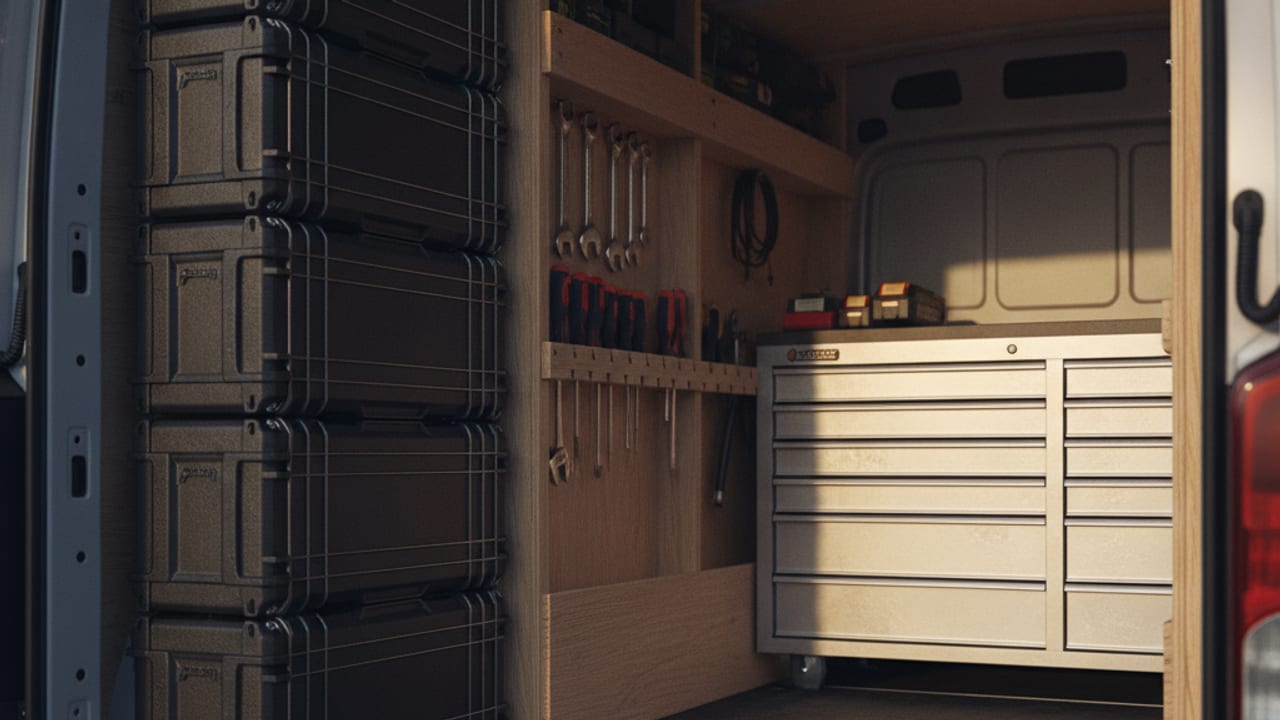
No single product stops tool theft from a van. What works is layered defence: aftermarket deadlocks or slamlocks on the doors, a bolted down vault or secure chest inside, smart parking, forensic marking, and taking the dearest kit indoors overnight. Each layer makes your van slower and noisier to rob than the one parked next to it, and that is usually enough to send a thief elsewhere.
Tool theft is one of the most demoralising things that can happen to a UK trade. It is not just the replacement cost, which can run to thousands of pounds; it is the lost work while you re-tool, the insurance excess, and the sick feeling of finding the door peeled open at 6am. This guide walks through the layers in the order most locksmiths and van security fitters recommend them, honestly, without pretending any of it makes a van impregnable.
Why factory van locks are not enough
Thieves defeat standard van locks in three main ways, and none of them requires much skill or time.
- Peel and steal. The best known attack on sliding and rear doors. The thief forces fingers or a pry bar into the top corner of the door and simply folds the skin down like a tin lid. On many popular panel vans this takes seconds, makes little noise, and needs no tools beyond a bar. Factory locks are irrelevant because the door itself gives way around them.
- Lock picking and drilling. Standard cylinder locks on older vans can be picked, drilled or snapped much like a cheap house lock. Once one door is open, the rest of the van is open.
- Keyless relay attacks. Newer vans with keyless entry can be opened by relaying the signal from the key inside your house to the van on the drive. The van believes the key is present and unlocks. A faraday pouch for your keys, or disabling keyless entry where the manufacturer allows it, closes this route for a few pounds.
The takeaway is blunt: if your security plan is the locks the van left the factory with, your plan is hope. Every other layer below exists because of that.
Deadlocks, slamlocks and door protection
Aftermarket locks are the first layer worth real money, and they should be fitted by a proper auto locksmith rather than bought as a self fit kit if you want them done right.
- Deadlocks add a separate, key operated bolt that is independent of the van's central locking. They resist picking and cannot be opened by a relay attack because they are purely mechanical. You lock them yourself, which is both their strength and their weakness: they only work when you remember to turn the key.
- Slamlocks lock automatically every time the door shuts. For multi drop drivers and anyone in and out of the van fifty times a day, they remove the human error. The trade off is that locking yourself out becomes possible, so keep a spare key somewhere sensible.
- Anti peel brackets and door skin reinforcement address the peel and steal attack directly, stopping the top corner of the door from folding. Paired with a deadlock, they make the classic seconds long attack a long, loud job.
- Visible deterrence counts. External lock bodies and hasps are ugly on purpose. A thief walking a car park at 2am is choosing between vans, and the one with visible extra locks advertises a harder job.
Building the internal layer? We compared the secure chests and van storage worth bolting down.
See our best tool chests and van storage guideInside the van: vaults, chests and taking kit indoors
Assume the doors will eventually be beaten. The second layer is making sure that getting into the van does not mean getting your tools.
A steel van vault or site box, bolted through the van floor with coach bolts and backing plates, turns a thirty second grab into a prolonged attack with tools, in an awkward space, making a racket. Most opportunists will not stay for that. Look for boxes with concealed or shrouded locks, full length hinges that cannot be levered off, and enough gauge of steel that a pry bar flexes the bar rather than the lid. Bolting down matters as much as the box itself: an unfixed chest, however strong, just gets carried away whole by two people.
Racking with lockable drawers adds a lesser but useful layer for mid value kit, and it keeps an inventory obvious at a glance, so you notice a theft quickly.
Then there is the layer that costs nothing: take the most expensive items indoors overnight. Nobody enjoys carrying batteries, lasers and breakers into the house every evening, but thieves target vans precisely because the kit sleeps in them. Many trades split the difference sensibly: consumables and heavy gear stay in the vault, while the four or five dearest items, which are usually small, come inside. If a window sticker saying no tools are left in the van overnight is actually true, it is worth having; if it is a bluff, experienced thieves call it.
Parking tactics and deterrents
Where and how you park changes your odds more than most gadgets.
- Back the rear doors up against a wall or another vehicle so they physically cannot be opened wide, and put the sliding door side against a hedge or fence where you can. It costs nothing and removes the easiest attack surfaces.
- Light and sightlines. A drive beats the street, a well lit street beats a dark one, and a spot under a camera or a neighbour's window beats a quiet corner. Thieves want privacy; deny it.
- Alarms and CCTV. A van alarm with interior sensors, or a cheap camera and doorbell style unit covering the drive, adds noise and evidence. Even inexpensive tilt and vibration alarms from a pound shop, stuck inside the load area, shriek when the door is forced and can be enough to end an attack. They are not sophisticated; they do not need to be.
- Trackers will not stop a theft but massively improve the chance of recovering the van itself, and some insurers discount for approved units.
Marking, records and the insurance reality
The final layer accepts that some thefts succeed and limits the damage.
Forensically mark and register your tools. Marking kits and registration schemes such as DataTag let police link recovered tools back to you, and visibly marked tools are harder to sell on, which lowers their value to a thief in the first place. At minimum, engrave or paint mark everything with something identifiable and photograph the results.
Keep an inventory. Photograph each tool, note serial numbers, and keep receipts, even just as photos in a cloud folder. When you report a theft, a precise list with serials gives police something to act on and gives your insurer no room to quibble. Trying to reconstruct three years of purchases from memory the morning after a break in is miserable.
Read your tool insurance properly before you need it. Tools in van cover is notorious for the small print: many policies exclude overnight theft entirely, or only pay out between certain hours, or require forced entry evidence, or cap single item and total payouts well below what a full van is worth. Check the overnight position, the security conditions you must meet for a claim to be valid, and whether the sums insured reflect replacement cost. An accurate inventory makes underinsurance obvious before the theft rather than after.
The strongest internal layer is a serious steel chest, bolted down. We picked the ones worth buying.
Compare the best tool chests and van storage for UK tradesFrequently asked questions
What is the single best upgrade if I can only afford one thing?
Professionally fitted deadlocks or slamlocks on the load doors, with anti peel protection if your van model is known for the attack. They defend the point where most thefts start, they are purely mechanical so relay gadgets cannot touch them, and their visible lock bodies deter thieves before an attack begins.
Do the window stickers saying no tools are left in this van overnight work?
Only if they are true. Opportunists may move on, but experienced thieves treat stickers as a bluff and check anyway. If the sticker is backed by an empty van or a bolted down vault, you lose little either way. If it is guarding a van full of kit behind factory locks, it changes nothing.
Will my van insurance cover stolen tools?
Usually not by default. Standard van insurance covers the vehicle; tools need separate tools in van cover or a tools extension, and those policies often exclude overnight theft, require evidence of forced entry, or cap payouts per item. Read the schedule, meet the stated security conditions, and keep receipts and serial numbers so a valid claim pays out in full.
Is a bolted down tool chest really worth it if thieves can get into the van anyway?
Yes, because time and noise are what defeat most thieves. Getting through the doors is stage one; a heavy gauge steel box, coach bolted through the floor with shrouded locks, is a second job that takes serious tools and minutes of loud work in a confined space. Most attacks end when the effort stops being worth it.