Best Stand Mixers UK 2026: Six Picks Compared
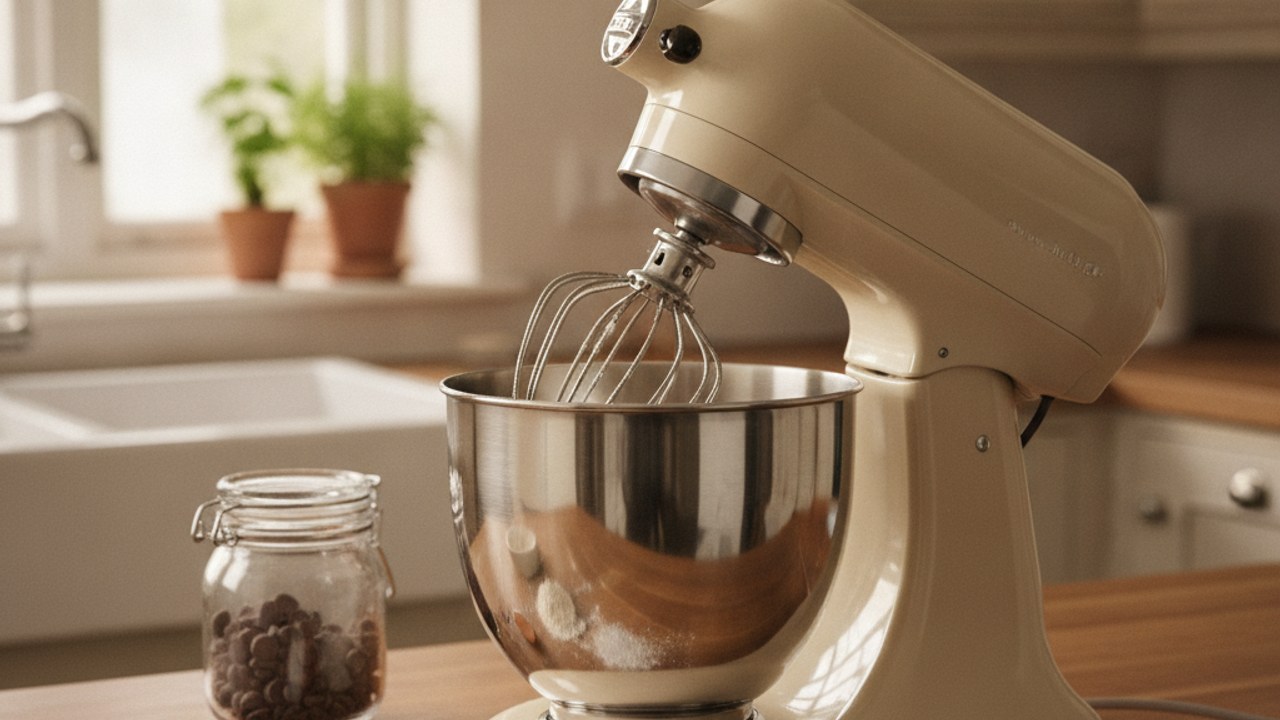
A stand mixer is the difference between baking being a workout and baking being a pleasure. It kneads dough that would wear your arms out, whips cream and egg whites in moments, and creams butter and sugar properly while you get on with the rest of the recipe. The catch is the price spread: nearly identical looking machines run from under a hundred pounds to over five hundred, and the differences that justify the gap, motor quality, bowl action and build weight, are invisible in the product photos.
This guide explains the three things that genuinely separate stand mixers, then compares six models sold on Amazon UK right now, from a solid budget starter to the iconic KitchenAid. No invented test bakes, just the trade offs laid out plainly so you buy the mixer that matches how much you actually bake.
The Three Things That Actually Matter
Ignore the accessory count on the box and look at these three things instead.
- Motor and build versus what you actually make. Whipping cream is easy work, but bread dough is brutal on a mixer, and this is where cheap machines fail. A light mixer with an ambitious wattage figure will still strain, walk across the worktop and overheat on a stiff dough, while a heavy, well geared machine kneads calmly for years. Be honest about your baking: occasional cakes suit a budget machine, weekly bread needs proper build quality. Weight is a surprisingly honest signal, because a heavier mixer is generally a sturdier one.
- Bowl size and mixing action. Around 4 to 5 litres suits most households, while big batch bakers and bread makers want 5 litres plus. Just as important is planetary action, where the beater spins on its own axis while orbiting the bowl, reaching the sides without you scraping constantly. All six picks here use it, but cheaper machines sweep less of the bowl, so a splash guard with an add funnel and a well fitted scraper beater are worth having. A second bowl or a pouring shield turns up on some models and is genuinely useful mid recipe.
- Attachments and what the hub unlocks later. Every stand mixer comes with the core trio of beater, whisk and dough hook. The dearer machines add a power hub that drives pasta rollers, mincers, spiralisers and more, which quietly turns the mixer into a kitchen system, and it is the strongest argument for the Kenwood and KitchenAid ecosystems. If you can see yourself rolling pasta or mincing your own meat one day, buy into a hub system now, because the attachment range is what you are really paying the premium for.
All Six Picks at a Glance
| Pick | Best for | Bowl | Typical price band |
|---|---|---|---|
| Russell Hobbs Go Create | Budget starter | ~3.5 to 4 L | £60 to £100 |
| Duronic SM100 | Value step-up | ~4 L | £80 to £130 |
| Bosch MUM Serie | Compact and capable | ~3.9 L | £120 to £250 |
| Kenwood kMix | Design and dough | ~5 L | £250 to £400 |
| Kenwood Chef | The baker's workhorse | ~4.6 to 5 L | £280 to £450 |
| KitchenAid Artisan | The icon | ~4.8 L | £350 to £550 |
Bands are typical Amazon UK prices at the time of writing, quoted as ranges because prices move often.
Our Six Picks for 2026
Russell Hobbs Go Create Stand Mixer
Best budget starter
The Russell Hobbs Go Create is the affordable way to find out how much you will actually use a stand mixer, bringing planetary mixing, multiple speeds and the standard beater, whisk and dough hook trio for the price of a supermarket shop. It is light enough to lift from a cupboard easily, simple to use and clean, and perfectly capable of cakes, cookies, batters and cream. Considerations: the lighter build means it will shuffle and strain on heavy bread dough, the bowl is on the smaller side, and there is no attachment hub to grow into. For an occasional baker, a student kitchen or a first mixer, it does the job for a fraction of the big names' prices. Typical band is around £60 to £100.
View on Amazon UKDuronic SM100 Stand Mixer
Best value step-up
The Duronic SM100 is the budget machine that behaves like a dearer one, pairing a 1000 watt motor with a 4 litre stainless bowl, planetary mixing, a tilting head and a splash guard with an add funnel. It handles everyday baking with ease and copes with occasional bread better than the entry machines, and Duronic is a British family firm with responsive support, which shows in the details. Considerations: it is still a light machine next to a Kenwood, so frequent stiff doughs will test it, the styling is functional rather than beautiful, and there is no accessory hub. For a regular home baker who wants reliable everyday performance without premium spend, it is the value sweet spot. Typical band is around £80 to £130.
View on Amazon UKBosch MUM Serie Stand Mixer
Best compact and capable
The Bosch MUM Serie takes a different approach from the heavy British and American icons, packing genuine mixing ability into a lighter, more compact body that suits smaller kitchens and anyone who lifts the mixer out per bake. German engineering shows in the clever details, from the fold-out multi purpose arm to the neat accessory storage, and the range spans sensible mid range prices. Considerations: the lighter body means it is not the machine for twice weekly bread, the bowl is a little smaller than the premium picks, and the look is appliance rather than ornament. For a small kitchen or a baker who values easy handling and storage over sheer mass, it is the smart European alternative. Typical band is around £120 to £250 depending on the model.
View on Amazon UKKenwood kMix Stand Mixer
Best design with proper dough power
The Kenwood kMix is the machine for people who want their mixer on show, pairing genuinely striking retro styling and premium colours with Kenwood's serious mixing engineering underneath. The all metal body is heavy and planted, the 5 litre bowl handles big batches, and it kneads bread dough properly rather than nominally, which many pretty mixers do not. Considerations: it costs real money, the accessory range is narrower than the Chef's full hub system, and the weight that makes it stable also makes it a fixture rather than a cupboard machine. For a design led kitchen where the mixer earns its worktop spot and gets used for everything from cakes to bread, it is the stylish serious choice. Typical band is around £250 to £400.
View on Amazon UKKenwood Chef Stand Mixer
Best baker's workhorse
The Kenwood Chef has been the British baker's machine for seventy years, and the modern versions carry that on with powerful motors, big bowls and the range's killer feature, the multiple power outlets that drive an enormous ecosystem of attachments from pasta rollers to mincers, blenders and food processors. It kneads large bread doughs without complaint, the controls are simple, and spares and attachments will still be available a decade from now. Considerations: it is big and heavy, the classic looks are more workshop than showpiece next to the kMix, and the attachment habit gets expensive. For a serious home baker who wants one machine to build a whole kitchen around, this is the workhorse to buy once and keep. Typical band is around £280 to £450 depending on the model.
View on Amazon UKKitchenAid Artisan Stand Mixer
Best icon, built to last decades
The KitchenAid Artisan is the stand mixer as heirloom, an all metal American icon that has barely changed shape in decades because it has not needed to. The tilt head design, the huge colour range and the direct drive attachment hub that powers pasta rollers, mincers and dozens more make it as capable as it is beautiful, and well looked after machines routinely serve for twenty years and more. Considerations: it is the dearest machine here, it is genuinely heavy, and for pure bread kneading capacity the Kenwood Chef arguably works harder for the same money. For someone who bakes regularly, wants the best known mixer in the world on their worktop and intends to keep it for life, it remains the aspirational buy that delivers. Typical band is around £350 to £550.
View on Amazon UKWhich One Should You Buy?
Testing the water? The Russell Hobbs Go Create covers cakes and cream cheaply, and the Duronic SM100 adds power and a bigger bowl for regular bakers on a budget.
Baking every week? The Bosch MUM suits small kitchens, the Kenwood kMix pairs style with real dough power, and the Kenwood Chef is the expandable workhorse.
Buying once for decades? The KitchenAid Artisan is the icon with the attachment ecosystem, built and styled to outlast every kitchen refit around it.
Frequently Asked Questions
Is a stand mixer worth it over a hand mixer?
If you bake more than occasionally, yes. A hand mixer whips and creams perfectly well but ties up your hands, struggles with stiff mixtures and cannot knead bread dough at all. A stand mixer does the work unattended while you weigh, prep or wash up, kneads properly, and handles bigger batches. If your baking is a few fairy cakes a year, keep the hand mixer, but the moment bread, weekly bakes or big family batches enter the picture, the stand mixer stops being a luxury and starts being the tool.
What wattage does a stand mixer need?
Treat wattage as a rough guide, not a ranking. A well engineered, well geared machine can knead calmly at a modest quoted wattage while a light machine with a big number strains, walks and overheats, because build quality and gearing matter more than the figure on the box. As a rule of thumb, occasional cake baking is fine on most machines, while regular bread needs a heavy, sturdy mixer whatever its wattage claims. The machine's weight and the maker's dough capacity figures tell you more than watts alone.
Can a stand mixer knead bread dough?
The good ones can, and it is the single biggest reason to buy quality. Fit the dough hook, keep to the maker's flour capacity, and use a low speed, letting the machine work for several minutes until the dough turns smooth and elastic. Budget mixers will manage a soft, small dough occasionally but strain on stiff or large ones, which is where motors burn out. If bread is a weekly habit, choose the Kenwood Chef, kMix or KitchenAid class of machine and it will knead for years without complaint.
Which stand mixer attachments are actually useful?
The core trio that comes in the box, flat beater for creaming, whisk for air and dough hook for kneading, covers almost all baking. Beyond that, a scraper or flex edge beater genuinely saves scraping the bowl, and a pouring shield helps with flour clouds. Hub attachments are where it gets interesting: pasta rollers and mincers are the two most loved, turning the mixer into a pasta machine or butcher's bench. Buy those as the need arises rather than in a bundle, and check they fit your exact model's hub.
KitchenAid or Kenwood, which is better?
Both are superb and the honest answer is what you value. The KitchenAid Artisan wins on looks, colour choice and resale, and its hub ecosystem is huge, which is why it is the aspirational default. The Kenwood Chef typically gives you a larger bowl, more raw kneading capability and multiple attachment outlets for the same or less money, which is why serious bread bakers lean Kenwood. Neither will disappoint, so decide whether the worktop statement or the workhorse capacity matters more in your kitchen.