Best Espresso Machines UK 2026: Six Picks Compared
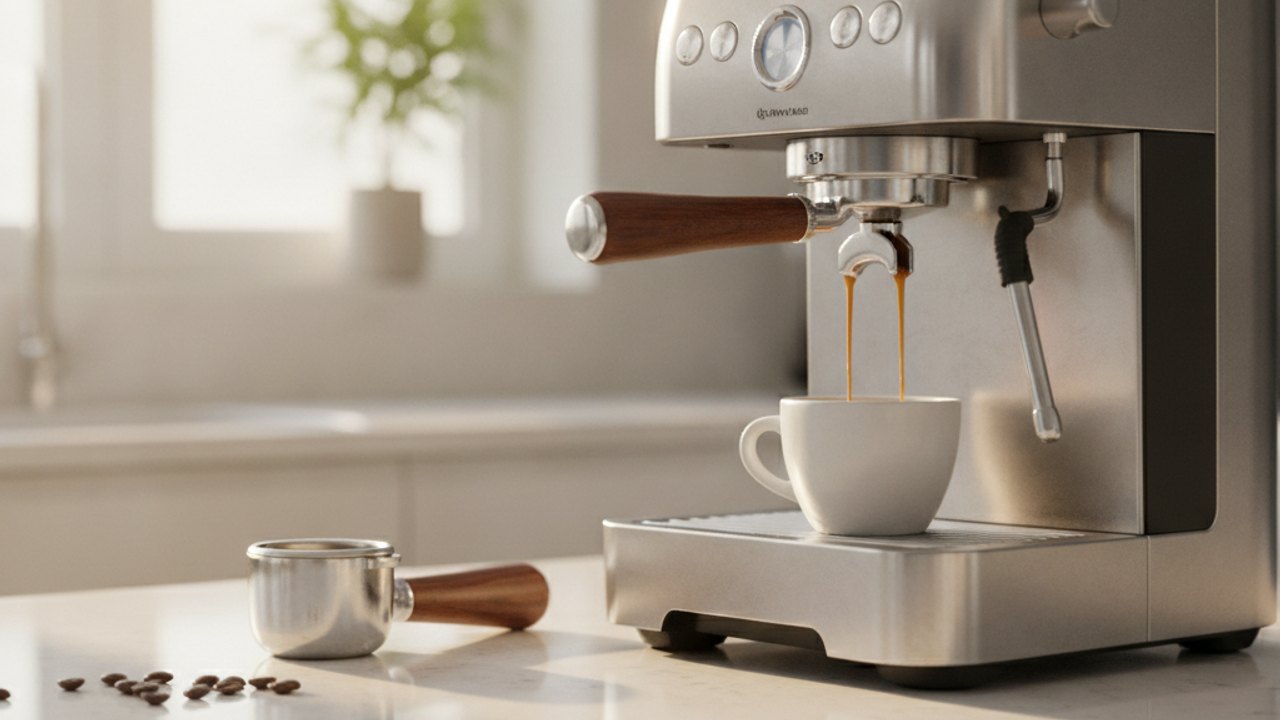
A good espresso machine pays for itself surprisingly quickly. A daily flat white from a coffee shop is comfortably over a thousand pounds a year, so a machine that makes a genuinely good one at home earns its keep inside a year and keeps going. The catch is that espresso is a craft, and the machine is only half of it, so the honest question is not which machine makes the best coffee but which machine suits how much effort you actually want to put in. The UK market on Amazon is dominated by a few brands, chiefly Sage and De'Longhi, with Gaggia for enthusiasts, and understanding what separates them is the key to buying once and being happy.
This guide explains the three things that decide which machine suits you, then compares six espresso machines genuinely sold on Amazon UK right now, from a slim budget model up to the all-in-one machines with a grinder built in. No invented tasting notes, no fake tests, just the trade offs laid out plainly.
The Three Things That Actually Matter
Ignore the bar pressure printed on the box, which is marketing, and look at these three things instead.
- Grinder: built in, separate, or none. This is the decision that matters most, because fresh grinding is the single biggest factor in good espresso. Bean-to-cup and all-in-one machines have a grinder inside, so you tip beans in and go, which is the simplest path to good coffee. Separate espresso machines make you buy and use a standalone grinder, which costs more and takes more space but gives better results and lets you upgrade each part. Pre-ground coffee works but goes stale fast and never reaches the same quality. Decide honestly whether you want a grinder handled for you or are happy to run a separate one.
- Manual, automatic or bean-to-cup. A manual or semi-automatic machine gives you control over the shot and the milk, which is where the fun and the best results live, but there is a learning curve and some morning effort. A fully automatic bean-to-cup machine makes a drink at the touch of a button with almost no skill or cleanup, trading a little quality and cafe theatre for pure convenience. Be honest about which person you are: the one who enjoys the ritual, or the one who just wants good coffee fast before work.
- Steam power for milk. If you drink flat whites, lattes and cappuccinos rather than just black espresso, the milk steaming matters as much as the shot. Look for a proper steam wand that lets you texture microfoam yourself on the machines aimed at enthusiasts, or a reliable automatic frother on the convenience machines. Weak steam is the most common disappointment on cheaper machines, so if milk drinks are your thing, prioritise a machine known for strong, controllable steam.
All Six Picks at a Glance
| Pick | Best for | Grinder | Typical price band |
|---|---|---|---|
| Sage Bambino Plus | Compact quality for most people | None (add a grinder) | £280 to £360 |
| Sage Barista Express | All-in-one with grinder built in | Built in | £520 to £650 |
| De'Longhi Dedica Arte | Slim budget espresso | None (add a grinder) | £150 to £220 |
| Gaggia Classic Evo Pro | Enthusiasts who want to learn | None (add a grinder) | £380 to £460 |
| De'Longhi La Specialista Arte | Built-in grinder alternative | Built in | £350 to £500 |
| De'Longhi Magnifica | Hands-off automatic bean-to-cup | Built in (automatic) | £300 to £500 |
Bands are typical Amazon UK prices at the time of writing, quoted as ranges because prices move often.
Our Six Picks for 2026
Sage Bambino Plus Espresso Machine
Best compact quality for most people
The Bambino Plus is the machine that punches far above its size, and for many people it is the sweet spot. It heats up in seconds thanks to a thermojet system, pulls a genuinely excellent shot, and its automatic steam wand textures microfoam for flat whites and lattes better than machines costing twice as much, with a hands-off setting or manual control as you learn. It is small enough to leave on a worktop without dominating it. Considerations: it has no grinder, so you need a separate one to get the best from it, which adds cost and space, and the compact size means a smaller water tank you refill more often. Paired with a decent grinder, it makes cafe quality milk drinks for the money, which is why it is so widely recommended. Typical band is around £280 to £360.
View on Amazon UKSage Barista Express Espresso Machine
Best all-in-one with a grinder built in
The Barista Express is the machine that got a generation into home espresso, because it puts a conical burr grinder, a quality espresso machine and a steam wand in one unit, so you go from beans to a flat white on one worktop appliance. You grind straight into the portafilter, dose and tamp, pull your shot and steam your milk, learning real barista skills without juggling separate machines. It is superbly built and holds its value. Considerations: it is a larger, heavier machine that needs the worktop space, the built-in grinder, while good, is not as capable as a dedicated standalone, and there is a genuine learning curve to dial it in. For someone who wants one machine that does everything and is happy to learn, it is the classic recommendation. Typical band is around £520 to £650.
View on Amazon UKDe'Longhi Dedica Arte Espresso Machine
Best slim budget espresso machine
The Dedica is the answer to how little you can spend and still make real espresso rather than pod coffee, and its party trick is a body just 15cm wide that squeezes into the tightest kitchen. It takes ground coffee or ESE pods, pulls a respectable shot, and has a manual steam wand for milk that, with a little practice, does a decent flat white. Considerations: it is a budget machine, so the shot and especially the steam power are a step below the Sage and Gaggia machines, it has no grinder, and the small size means a small tank. But for a slim kitchen, a tight budget, or a first machine to find out whether home espresso suits you, it is a lot of capability for the money. Typical band is around £150 to £220.
View on Amazon UKGaggia Classic Evo Pro Espresso Machine
Best for enthusiasts who want to learn the craft
The Gaggia Classic is a legend among home baristas, and the Evo Pro is the current version of a machine that has barely changed in decades because it works. It uses a commercial-style portafilter and a proper steam wand, is built like a tank from metal rather than plastic, and is famously repairable and upgradeable, so enthusiasts tinker with it for years. It rewards skill with espresso that rivals machines costing far more. Considerations: it has no grinder and no automation, so it demands a good grinder and a willingness to learn, it takes a little longer to warm up and switch between brewing and steaming, and it is not the machine for someone who just wants a button. For the person who wants to genuinely learn espresso and keep a machine for a decade, it is the enthusiast's choice. Typical band is around £380 to £460.
View on Amazon UKDe'Longhi La Specialista Arte Espresso Machine
Best built-in grinder alternative to the Sage
The La Specialista Arte is De'Longhi's answer to the Sage Barista Express, putting a burr grinder, espresso machine and steam wand in one unit at a keen price. It grinds fresh into the portafilter, has a sensible set of grind settings, and a manual steam wand for milk, giving you the all-in-one convenience of grinding and brewing on one machine without stepping up to the Sage's price. Considerations: the grinder and shot quality are a small step behind the Barista Express to keen eyes, the build leans more on plastic, and like all built-in-grinder machines it is a bigger worktop appliance. For someone who wants the grind-and-brew convenience for less than the Sage, it is the value pick in the category. Typical band is around £350 to £500.
View on Amazon UKDe'Longhi Magnifica Bean-to-Cup Coffee Machine
Best hands-off automatic for pure convenience
Not everyone wants to be a barista before work, and the Magnifica is the machine for people who just want good coffee at the touch of a button. It is a fully automatic bean-to-cup machine: it grinds, doses, tamps, brews and, on the milk versions, froths, then cleans its own brew unit, so there is almost no skill or cleanup involved. For a busy household that gets through a lot of coffee with no fuss, it is transformative. Considerations: the espresso is very good rather than the absolute best a skilled hand gets from a manual machine, the automatic milk frothing is convenient but less characterful than hand-textured microfoam, and bean-to-cup machines need regular descaling and cleaning to keep running. For convenience above all, it is the standout. Typical band is around £300 to £500.
View on Amazon UKWhich One Should You Buy?
Want the best value quality? The Sage Bambino Plus paired with a separate grinder makes cafe quality milk drinks for the money, and is compact enough for any kitchen.
Want one machine that does it all? The Sage Barista Express builds the grinder in and is the classic grind-and-brew all-rounder, with the De'Longhi La Specialista Arte the keener-priced alternative.
Want to learn, or want no effort at all? The Gaggia Classic Evo Pro is the enthusiast's machine to master over years, while the De'Longhi Magnifica bean-to-cup makes good coffee at the touch of a button with no skill required. The Dedica Arte is the slim budget way in.
Frequently Asked Questions
Do I need a separate grinder, or should I buy a machine with one built in?
Fresh grinding is the single biggest factor in good espresso, so you need one or the other. A machine with a grinder built in, like the Sage Barista Express or a bean-to-cup, is the simplest path and saves worktop space. A separate espresso machine plus a standalone grinder costs more and takes more room but gives better results and lets you upgrade each part later. What you should not do is rely on pre-ground coffee long term, as it goes stale within days and never reaches the same quality.
What is the difference between an espresso machine and a bean-to-cup machine?
An espresso machine, manual or semi-automatic, gives you control over grinding, dosing, the shot and the milk, which is where the best results and the enjoyment live, but there is a learning curve. A bean-to-cup machine is fully automatic: it grinds, brews and often froths at the touch of a button with almost no skill or cleanup, trading a little quality and craft for pure convenience. Choose based on whether you enjoy the ritual or just want good coffee fast.
Does the bar pressure number matter?
Less than the box suggests. Many machines advertise 15 or 19 bar, but espresso is actually brewed at around 9 bar, and the higher numbers are the pump's maximum rather than the brewing pressure. A quality machine manages pressure properly regardless of the headline figure. Ignore the bar number as a quality guide and focus instead on the grinder, the build quality, and the steam power for milk, which are what actually separate good machines from poor ones.
Can I make flat whites and lattes, not just espresso?
Yes, and for milk drinks the steaming matters as much as the shot. Machines aimed at enthusiasts have a manual steam wand that lets you texture silky microfoam by hand, which is what makes a proper flat white, while convenience machines have an automatic frother that does it for you with less character but no skill. If milk drinks are your main order, prioritise a machine known for strong, controllable steam, such as the Sage models, over one with weak steam however good its espresso.
How much maintenance does an espresso machine need?
Regular but simple. Every machine needs descaling on a schedule that depends on your water hardness, which in hard-water parts of the UK is more often, and a water filter or filtered water reduces scale and improves taste. Manual machines need the portafilter and group head rinsed and occasionally backflushed, while bean-to-cup machines run automatic cleaning cycles but still need descaling and the brew unit kept clean. Skipping maintenance is the main reason machines fail early, so factor a few minutes a week and the odd descale into the deal.
Buying for someone else this Christmas? Our coffee gifts guide matches six machines to the person you are buying for.