Best Projectors UK 2026: Six Home Cinema Picks Compared
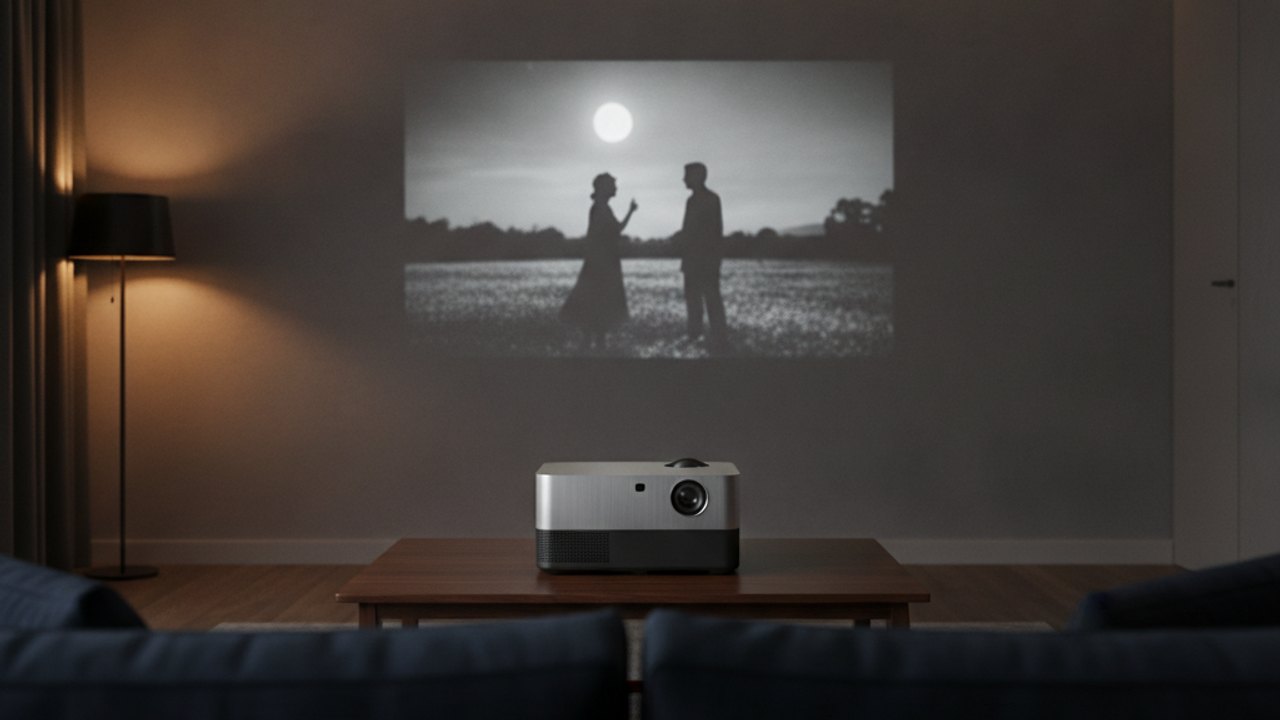
A projector turns a spare wall into a cinema screen for a fraction of what a television the same size would cost, which is exactly why they have become a living-room staple rather than a specialist toy. The catch is that the projector market is full of wildly inflated numbers, so buying well is mostly about seeing through the marketing to the two or three specifications that actually decide whether the picture looks good in your room. Get those right and even a mid-priced projector is genuinely impressive.
This guide explains the three things that decide which projector suits you, then compares six genuinely sold on Amazon UK right now, from a keen budget model up to a proper home cinema projector. No invented brightness claims, no fake tests, just the trade offs laid out plainly.
The Three Things That Actually Matter
Ignore the huge numbers on the box and look at these three things instead.
- Brightness measured in ANSI lumens. This is the number that decides whether the picture holds up in your room, and it is the one most abused in marketing. Reputable projectors quote ANSI lumens; cheap ones quote a much bigger, meaningless LED or light-source lumen figure, so treat any huge number without the word ANSI with suspicion. As a rough guide, a fully dark room is happy with around 500 to 1000 ANSI lumens, while a room with some ambient light or daytime use wants 2000 ANSI lumens or more. Match the brightness to how dark you can make the room.
- Native resolution, not supported resolution. A projector's native resolution is how many pixels it actually has; the supported resolution is just what signal it will accept and then downscale. Many budget projectors advertise 4K but are native 720p or 1080p, which is a very different picture. For most people a genuine native 1080p projector is the sweet spot, and true 4K, whether native or by pixel-shifting, is worth it on a large screen if the budget stretches. Read the native figure and ignore the supported one.
- Smart and portable, or traditional and fixed. Smart projectors have streaming apps, and often a battery and auto-focus, built in, so you unbox one and watch Netflix on a wall with no other kit, which suits casual and movable use. Traditional home cinema projectors have no apps and expect a fixed install with a streaming stick or player, but put their money into the lamp or laser light engine and the picture, so they look better for a dedicated room. Decide whether you want grab-and-go convenience or the best fixed-room picture.
All Six Picks at a Glance
| Pick | Best for | Type | Typical price band |
|---|---|---|---|
| XGIMI Horizon | Best all-in-one smart projector | Smart, native 1080p | £700 to £1,000 |
| Epson EH-TW7100 | Best traditional home cinema picture | Fixed, 4K pixel-shift | £1,100 to £1,500 |
| BenQ TH685P | Best for gaming | Fixed, native 1080p | £550 to £800 |
| Anker Nebula Capsule 3 | Best portable smart projector | Smart, portable | £450 to £600 |
| Samsung The Freestyle | Best compact lifestyle projector | Smart, compact | £400 to £600 |
| WiMiUS native 1080p | Best budget entry point | Budget, native 1080p | £100 to £200 |
Bands are typical Amazon UK prices at the time of writing, quoted as ranges because prices move often.
Our Six Picks for 2026
XGIMI Horizon Smart Projector
Best all-in-one smart projector for most people
The XGIMI Horizon is the machine that best answers what most people actually want: a single box you set up in minutes that gives a big, bright, genuinely good picture with the apps built in. It is a bright native 1080p projector with strong ANSI lumens that copes with a little ambient light, smart streaming on board, and clever auto-focus and keystone that square the image up for you. Considerations: it is a premium price for a 1080p projector, dedicated cinema projectors give a better picture in a fully dark room for the money, and built-in speakers, while good, are no match for a real sound system. For someone who wants one tidy box that does everything with the least fuss, it is the standout. Typical band is around £700 to £1,000.
View on Amazon UKEpson EH-TW7100 Home Cinema Projector
Best traditional home cinema picture
For a dedicated film room, a proper home cinema projector like the Epson EH-TW7100 still beats the all-in-one smart boxes on pure picture quality. It uses 4K pixel-shifting for a detailed, filmic image, has strong brightness and excellent colour from Epson's 3LCD system, and the lens shift and zoom make it far easier to position in a real room. Considerations: it has no smart apps, so you add a streaming stick or player, it is a larger fixed unit rather than something you move around, and it needs a reasonably dark room to shine. For someone building a dedicated home cinema who cares most about the picture, it is the standout. Typical band is around £1,100 to £1,500.
View on Amazon UKBenQ TH685P Gaming Projector
Best for gaming on a big screen
Gaming on a hundred-inch screen is a genuine thrill, and the BenQ TH685P is built for it. It pairs a bright native 1080p picture with low input lag, which is the specification that matters for games, so the on-screen action keeps up with your controller rather than lagging behind it. It is bright enough to use with some ambient light and has a dedicated game mode. Considerations: it is native 1080p rather than 4K, it is a fixed projector with no smart apps built in, and the built-in sound is basic, so a soundbar helps. For a console or PC gamer who wants a big, responsive picture without paying 4K prices, it is the standout, and it doubles as a capable film projector too. Typical band is around £550 to £800.
View on Amazon UKAnker Nebula Capsule 3 Portable Projector
Best portable smart projector
The Nebula Capsule 3 is the projector you can throw in a bag: a can-sized unit with a built-in battery, smart streaming and auto-focus, so you can put a big picture on a wall or a tent in the garden with nothing else plugged in. It is genuinely clever, quick to set up, and the built-in speaker is decent for its size. Considerations: as a compact battery projector it is not very bright, so it needs a dark room or nightfall to look its best and cannot fight daylight, the native resolution is modest, and battery run time limits a long film session. For camping, gardens, bedrooms and anywhere you want a screen with no wires, it is the standout. Typical band is around £450 to £600.
View on Amazon UKSamsung The Freestyle Projector
Best compact lifestyle projector
Samsung's The Freestyle is a lifestyle projector that leans into flexibility: a small, tilting unit that points anywhere including the ceiling, with Samsung's full smart TV platform built in and auto levelling and focus that set the picture up instantly wherever you place it. It is a genuinely fun, design-led device for casual viewing around the home. Considerations: like all compact projectors it is not very bright, so it wants a dim room, the picture and sound are good for the size rather than cinema grade, and it costs more than its brightness alone would suggest because you are paying for the smart platform and design. For someone who wants a stylish, move-anywhere smart projector for casual viewing, it is the standout. Typical band is around £400 to £600.
View on Amazon UKWiMiUS Native 1080p Projector
Best budget entry point
If you want to try a big-screen setup without spending hundreds, a well-reviewed budget projector like the WiMiUS native 1080p models is the sensible way in. Crucially it is genuinely native 1080p rather than an upscaled 720p panel dressed up as 4K, so the picture is respectable, and it usually includes basic features like keystone correction and Bluetooth. Considerations: it is not very bright by ANSI standards, so it truly needs a dark room, the smart features and build quality are basic, and colour and contrast are a clear step below the premium machines. But as an inexpensive way to find out whether projector viewing suits your room before spending more, it makes complete sense. Typical band is around £100 to £200.
View on Amazon UKWhich One Should You Buy?
Want one box that does everything? The XGIMI Horizon is the best all-in-one smart projector, bright enough for a normal room with the apps built in.
Building a dedicated film room? The Epson EH-TW7100 gives the best picture for a dark cinema room, and the BenQ TH685P is the pick if gaming responsiveness matters as much as films.
Want portable or budget? The Anker Nebula Capsule 3 and Samsung The Freestyle go anywhere with the apps built in, and the WiMiUS native 1080p is the cheapest honest way to try a big screen.
Frequently Asked Questions
Why do cheap projectors claim such huge brightness numbers?
Because there are two ways to measure brightness and only one is honest for comparison. Reputable projectors quote ANSI lumens, a standardised measure. Many cheap projectors quote LED or light-source lumens, a much bigger number that does not reflect the actual picture brightness. A projector advertising many thousands of lumens with no mention of ANSI is almost always far dimmer in practice than the number suggests. Always compare the ANSI figure, and treat anything else as marketing.
Do I need 4K, or is 1080p enough?
For most rooms and screen sizes, a genuine native 1080p projector looks excellent and is the value sweet spot. True 4K, whether native or by pixel-shifting, is worth paying for on a very large screen where you sit close enough to see the extra detail. What you should avoid is a budget projector that advertises 4K but is actually native 720p or 1080p and simply accepts a 4K signal, which is not the same thing. Read the native resolution, not the supported resolution.
How dark does the room need to be?
It depends on the projector's brightness. A dim or fully dark room lets even a modest projector look punchy, while daytime or ambient-light viewing needs a bright projector of around 2000 ANSI lumens or more. Portable and lifestyle projectors are generally dim, so they want darkness, while brighter home and gaming projectors cope with some light. Blackout blinds and a proper screen or a plain white wall both help a great deal.
Do I need a special screen, or will a wall do?
A smooth, plain white or very light grey wall works well and is what many people use happily. A dedicated projector screen improves brightness, contrast and colour accuracy noticeably, and is worth adding later if you get serious, but it is not essential to start. Avoid textured or strongly coloured walls, which distort the picture. If you cannot use a screen, a coat of proper matt white paint on a smooth wall is a cheap, effective compromise.
What about sound?
Most projectors have small built-in speakers that are fine for casual viewing but no match for a real setup, and the cinema-focused models often have very basic sound because they expect you to add your own. For films and gaming, a soundbar or a proper speaker system transforms the experience far more than people expect, so budget a little for sound if you are building a home cinema rather than relying on the projector's own speaker.