Best Home Music Production Equipment UK 2026: Build the Studio in the Right Order
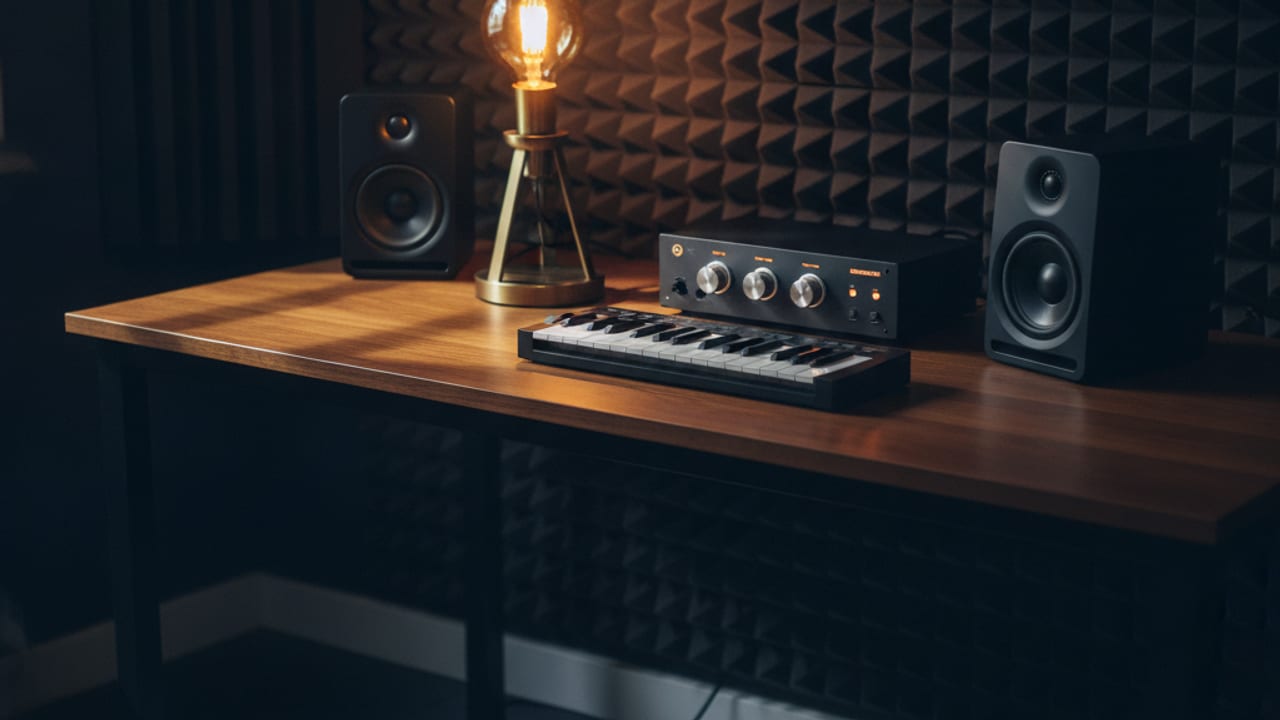
The bedroom studio is no longer a compromise. Records that chart are routinely finished in spare rooms, and the equipment that makes it possible has never been more affordable relative to what it does. The catch is that the market is enormous and beginners consistently spend in the wrong order, buying an exciting instrument before the boring box that everything plugs into, or big monitors for a room that cannot handle them. This guide picks six pieces of equipment sold on Amazon UK in 2026 that form a coherent home studio, and explains what order to buy them in.
A word on scope before the picks. British home studios are mostly untreated bedrooms with shared walls, so we weight our choices toward equipment that performs in that reality: headphones you can mix on at midnight, monitors sized for small rooms, and a microphone quiet enough to record vocals in a house rather than a booth. We also draw a quality line. There are sub £80 mini keyboards and desktop speakers everywhere, and they are fine toys, but this guide starts where equipment stops needing to be replaced within a year, because buying the lasting version once is the cheapest way to build a studio.
How to Spend Home Studio Money Wisely
Four principles separate a studio that gets finished tracks out of the door from a pile of regretted purchases.
- The interface is the foundation. Every microphone, guitar and pair of monitors runs through the audio interface, and it is the one component where reliability is non negotiable: driver crashes mid take are how sessions die. Buy an established interface with proven drivers on Mac and Windows first, before anything more glamorous. Two inputs cover the overwhelming majority of home recording, one voice plus one instrument.
- Monitoring is where accuracy lives. You cannot fix what you cannot hear. Closed back studio headphones are the honest first monitoring purchase for UK homes, because they work at any hour without a decibel reaching the neighbours and they remove the untreated room from the equation entirely. Speakers come second, sized to the room: in a typical British bedroom, 5 inch woofers are the ceiling, and bigger monitors genuinely make things worse by exciting room resonances.
- Controllers speed you up; they do not make you better. A MIDI keyboard turns clicking notes into playing them, which transforms both speed and musicality, and full size keys matter more than pad grids for most people. But controllers multiply an existing workflow rather than create one, so they follow the interface and monitoring, not precede them.
- One good microphone beats three cheap ones. For vocals in an untreated room, the specification that matters most is self noise, the hiss the microphone itself adds, because quiet sources in quiet homes expose it mercilessly. A single low noise large diaphragm condenser covers vocals, acoustic instruments and voiceover for years. USB microphones are convenient but an XLR microphone through your interface leaves the upgrade path open.
All Six Picks at a Glance
| Pick | Role | Best for | Typical price band |
|---|---|---|---|
| Focusrite Scarlett 2i2 4th Gen | Audio interface | The foundation purchase | £150 to £210 |
| Beyerdynamic DT 770 Pro 80 Ohm | Headphones | Late night mixing and tracking | £110 to £150 |
| KRK Rokit 5 G4 (pair) | Studio monitors | Small room accuracy | £270 to £340 |
| Novation Launchkey 49 MK3 | MIDI keyboard | Playing parts properly | £150 to £210 |
| Rode NT1 5th Generation | Microphone | Vocals in untreated rooms | £190 to £250 |
| Ableton Push 3 (controller) | Production controller | Ableton users going deeper | £750 to £900 |
Bands are typical Amazon UK prices at the time of writing, quoted as ranges because music equipment prices move often, and monitor pairs are sometimes listed per speaker, so check listings carefully.
Our Six Picks for 2026
Focusrite Scarlett 2i2 4th Gen Audio Interface
The foundation of the whole studio
Focusrite's Scarlett range has been the default first interface for a generation of producers, and the fourth generation 2i2 earns the position on merit rather than momentum. The preamps are clean with generous gain, enough to drive dynamic microphones properly, which older budget interfaces struggled with, the converters are specified far beyond what a home room will expose, and an auto gain function sets recording levels for you, removing the most common beginner recording error entirely. Driver stability on both Mac and Windows is the quiet superpower: this is a box that simply works, session after session, and the bundled recording software gets a new producer moving on day one. Considerations: two inputs is plenty for solo work but a band recording drums needs more, there is no MIDI socket for older hardware, and the gain knobs are digital encoders that some traditionalists find less tactile. As the first purchase for any home studio, nothing at this level is safer. Typical price band is £150 to £210.
View on Amazon UKBeyerdynamic DT 770 Pro 80 Ohm Studio Headphones
Best headphones for late night sessions
The DT 770 Pro has sat on studio heads for decades, and for UK bedroom producers it solves the two problems British housing creates: neighbours and untreated rooms. The closed back design keeps sound in, so a midnight mixing session bothers nobody, and mixing on headphones sidesteps the boomy corners and flutter echoes of a spare bedroom entirely. The sound itself is detailed and honest across the range with excellent separation, the German build is famously tough, and the velour ear pads stay comfortable across sessions that stretch to hours, something that cannot be said of most plasticky rivals. Every wearing part, pads, headband, cable, is replaceable, so a pair can genuinely last a decade. Considerations: choose the 80 ohm version, which any interface in this guide drives happily, note the cable is fixed rather than detachable, and remember closed backs slightly flatter bass, so check low end on another system before release. As a first serious monitoring purchase, this is where we would put the money. Typical price band is £110 to £150.
View on Amazon UKKRK Rokit 5 G4 Studio Monitors (Pair)
Best monitors for small British rooms
When the time comes to mix on speakers, the fourth generation Rokit 5 is sized exactly right for the rooms most UK producers actually have. Five inch woofers deliver enough low end to judge a bassline without overwhelming a bedroom the way 8 inch monitors do, and the G4's built in DSP is the genuinely useful part: a room correction system, adjusted via graphic EQ on the rear display with a companion app to guide measurement, that tames the worst of an untreated space. That matters more in practice than any driver specification, because in home studios the room is always the biggest problem. The front bass port also forgives placement near a wall, a mercy in small rooms where the textbook positioning is impossible. Considerations: buy the pair and check the listing is for two, budget for a pair of balanced TRS cables and isolation pads, which audibly tighten the bass on a desk, and resist the temptation to size up, because in a box room bigger monitors mean worse mixes, not better ones. Typical price band is £270 to £340 for the pair.
View on Amazon UKNovation Launchkey 49 MK3 MIDI Keyboard
Best MIDI keyboard for playing parts properly
Mini keyboards are everywhere and cheap, but two octaves of cramped keys teaches cramped habits, and this is a purchase where we would skip the budget tier deliberately: full size keys change what you can play, and 49 of them is the sweet spot between capability and desk space. The Launchkey 49 MK3 adds what British bedroom producers actually use, sixteen responsive pads for drums, eight knobs and nine faders that map themselves to major DAWs automatically, and the deepest Ableton Live integration of any keyboard at this level, with clip launching and device control on the hardware. Chord and scale modes are honest shortcuts for producers still building keyboard skills, and the arpeggiator is a genuine idea generator rather than a gimmick. Considerations: the synth action keybed suits producers rather than trained pianists, who will want weighted keys eventually, faders feel light compared with studio hardware, and Logic users get good but shallower integration than Ableton users. As the third purchase after interface and monitoring, it is the one that makes producing feel like playing music. Typical price band is £150 to £210.
View on Amazon UKRode NT1 5th Generation Condenser Microphone
Best vocal microphone for untreated rooms
Rode's NT1 family built its name on one number: self noise so low the microphone adds essentially nothing to a recording, and in a quiet British house at night that translates directly into cleaner vocal takes. The 5th Generation keeps that character and adds the feature that makes it the smart buy in 2026: dual XLR and USB output. Plug it into your Scarlett over XLR as the studio grows, or straight into a laptop over USB with a built in headphone output for podcasting and songwriting away from the desk, and its internal 32 bit float recording over USB is remarkably forgiving of badly set levels, effectively making clipped takes recoverable. The bundled shock mount and pop filter mean nothing else is needed to start. Considerations: a condenser this sensitive hears everything, including the boiler and the road outside, so record away from windows and consider a reflection filter, and dynamic microphone loyalists chasing a broadcast sound may prefer a different flavour entirely. For one microphone to cover vocals, acoustic guitar and voiceover for years, this is the pick. Typical price band is £190 to £250.
View on Amazon UKAbleton Push 3 Production Controller
Best deep upgrade for Ableton users
The Push 3 is the aspirational pick of this guide, and we include it because for one specific producer it is worth every pound: the committed Ableton Live user who wants to make music with hands on hardware rather than a mouse. The 64 pad grid is expressive in a way no budget controller approaches, with per pad pressure and slide that turns held notes into living ones, and the workflow, sequencing drums, playing melodies in scale, browsing sounds and mixing from the hardware, keeps eyes off the screen and attention on the music. The controller version connects to a computer running Live; a pricier standalone edition works untethered, and the controller can be upgraded later, which is the sensible route in. Considerations: this is a large, premium purchase that only makes sense if Ableton Live is already your committed DAW, users of other software should spend the money elsewhere in this guide, and it needs desk space and Live Intro or above to shine. For the right producer it is transformative; for everyone else, the first five picks are the studio. Typical price band is £750 to £900 for the controller version.
View on Amazon UKWhich Should You Buy First?
Starting from a laptop and nothing else? Buy in this order: Scarlett 2i2, then the DT 770 Pro. Interface plus closed headphones is a complete, neighbour proof studio for well under £400, and everything else builds on it without a wasted pound.
Already recording and want better results? The Rokit 5 pair upgrades your judgement and the NT1 5th Generation upgrades your source. If your mixes translate badly to other speakers, buy the monitors first; if your recordings are the weak link, the microphone.
Workflow feels slow? The Launchkey 49 turns clicking into playing and is the best value accelerator here. The Push 3 is the endgame version of the same idea, strictly for producers already living inside Ableton.
Frequently Asked Questions
What does a complete home studio setup cost in the UK?
A genuinely capable starting studio, the Scarlett 2i2 and DT 770 Pro from this guide, typically lands between £260 and £360 at current bands, and produces release quality results with practice. The full six piece studio spans roughly £1,600 to £2,000 spread over time, and spreading it is exactly what we recommend, buying each piece as the previous one stops being the bottleneck.
Do I need studio monitors, or are headphones enough?
Plenty of commercially released music is mixed largely on headphones, and in an untreated UK bedroom good closed backs are often more accurate than speakers, because they bypass the room. Monitors earn their place once you mix regularly, since ears fatigue slower on speakers and stereo image is easier to judge. The professional habit worth copying is checking every mix on both, plus a phone speaker.
Which DAW should a beginner choose?
The honest answer is that the differences are smaller than the internet suggests, and the best DAW is the one you learn deeply. The Scarlett bundles recording software to start with, Mac owners already have GarageBand which is genuinely capable, and the Launchkey and Push both point toward Ableton Live, the most popular choice for electronic music in the UK. Pick one, stay with it for a year, and ignore the debates.
Can I record decent vocals in an untreated bedroom?
Yes, with technique standing in for treatment. Record in the most furnished room available, since sofas, carpets, curtains and a full wardrobe absorb reflections better than empty walls, keep the microphone away from windows and corners, and get closer to the microphone rather than turning up the gain. A low self noise microphone such as the NT1 matters precisely here, because home vocal chains have no headroom for added hiss.
Is more expensive equipment the answer to better tracks?
Past the level in this guide, rarely. Everything here is specified beyond what an untreated room reveals, which means the next thousand pounds improves recordings less than the same money spent on room treatment, or the same time spent finishing more tracks. Upgrade when a specific limitation blocks you, more inputs, weighted keys, a second sound flavour, not because a review made something sparkle.