Impact Driver vs Combi Drill: Which Do You Actually Need?
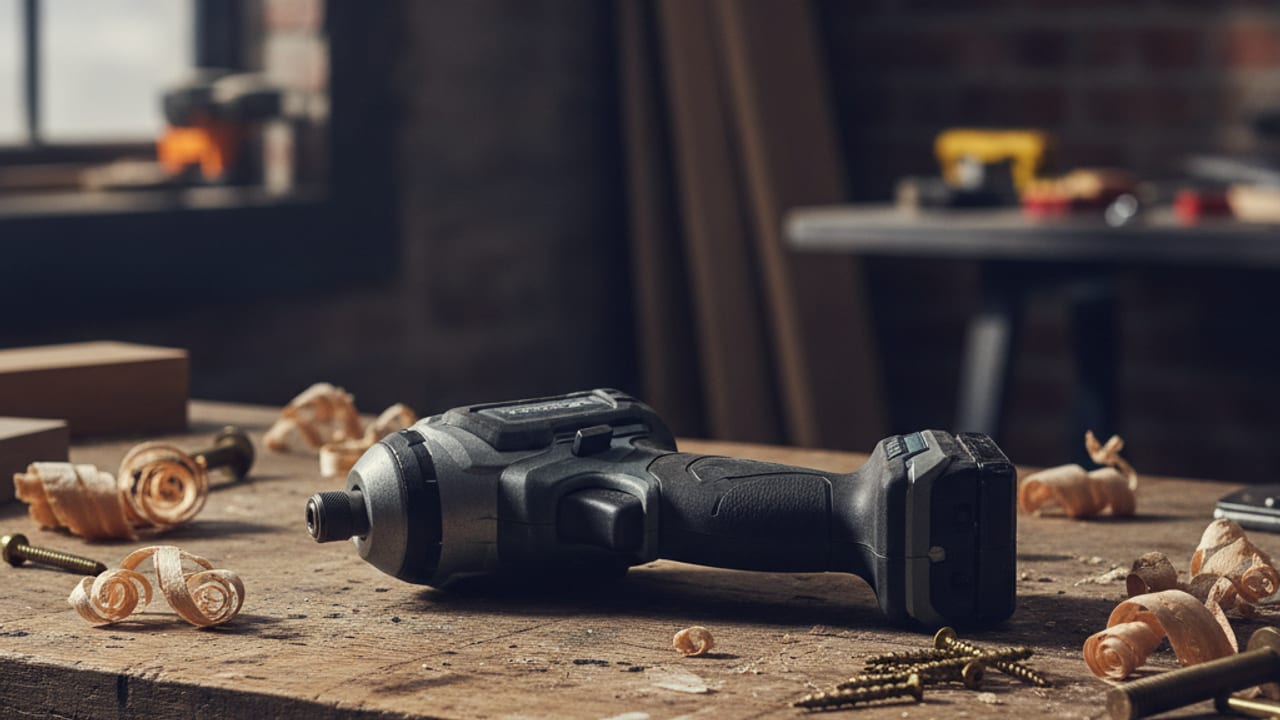
Short answer: a combi drill makes holes in wood, metal and masonry and has a clutch for controlled screwdriving, while an impact driver is a dedicated screw driving tool that delivers far more torque with no wrist strain. If you can only buy one tool, buy the combi drill. If you drive screws regularly, you will end up wanting both.
The two tools look similar, share batteries within a platform and often sell together in twin kits, which is exactly why so many people are unsure where the line sits. This guide explains what each tool actually does, where each one wins, and how to decide based on the work in front of you rather than the marketing on the box.
What Is the Actual Difference?
The clearest way to separate them is by mechanism, because everything else follows from it.
A combi drill (short for combination drill) is a drill first. It has a three jaw chuck that grips round or hex shank drill bits from about 1mm up to 13mm, an adjustable clutch that disengages the drive at a set torque so you do not overdrive screws or strip heads, and a hammer setting that adds a rapid forward chiselling action for drilling into brick and blockwork. One tool, three jobs: drilling wood and metal, drilling masonry, and controlled screwdriving.
An impact driver is a screwdriver first, and a very aggressive one. Instead of a chuck it has a quarter inch hex collet that only accepts hex shank bits, and instead of a clutch it has an internal hammer and anvil mechanism. When the fixing starts to resist, the mechanism spins a weighted hammer that strikes the anvil dozens of times a second, delivering torque in rapid rotational blows rather than one continuous twist. The result is two or three times the torque of a typical combi drill, and because the force arrives in pulses, almost none of it kicks back through your wrist. Driving a 100mm screw into joinery with a combi will twist your arm when it binds; an impact driver just rattles and keeps going.
That mechanism explains the trade offs. The impact driver has no clutch, so delicate fixings rely on your trigger finger and, on better models, an electronic low speed mode. It cannot take normal twist drill bits unless they have hex shanks, and it has no hammer drilling action for masonry. The combi, in turn, is longer, heavier, and runs out of torque long before an impact driver does.
Where Each Tool Wins
| Job | Combi drill | Impact driver |
|---|---|---|
| Drilling wood and metal | Yes, its core job | Only with hex shank bits, and less accurately |
| Drilling brick and block | Yes, hammer mode | No |
| Small screws, hinges, hardware | Yes, clutch control | Possible, but easy to overdrive |
| Long screws, coach screws, decking | Struggles, wrist strain | Yes, its core job |
| Tight spaces | Longer body limits access | Compact head fits between joists |
| Bolts and nuts (with hex adaptors) | Weak | Strong |
In practice the split on site is simple: holes and delicate fixings go to the combi, everything that needs driving hard goes to the impact driver. A kitchen fitter drills the pilot hole and cabinet holes with the combi, then swaps to the impact driver for the long screws that pull the units together. A decking job is a pilot bit in the combi and a bit holder in the impact driver, worked as a pair.
The bit question
Impact drivers also demand impact rated bits. The hammering action shatters ordinary screwdriver bits surprisingly quickly, so budget a few pounds for a decent impact rated set with torsion zones that absorb the shock. Hex shank drill bits do exist and let an impact driver make holes in wood at a pinch, but the collet has more runout than a proper chuck, so hole placement is less precise and small diameter bits snap easily. Treat drilling in an impact driver as a convenience, not a plan.
Decided you need the screw driving half of the pair? We compared six impact drivers genuinely sold on Amazon UK, from value picks to site favourites.
See our best cordless impact drivers guideOnly Buying One Tool? Buy This
If you are a homeowner or occasional DIYer buying a single tool, buy the combi drill. It is the generalist: it drills every material you will meet in a UK house, including brick and block for wall plugs, and its clutch makes it a perfectly good screwdriver for flat pack furniture, shelves, curtain poles and door hardware. An impact driver on its own cannot hang a shelf on a masonry wall, and that is the job that starts most DIY tool purchases.
The moment the balance tips is volume and length of fixings. If you are building a deck, boarding a loft, putting up fencing or fitting out a van, driving hundreds of long screws with a combi is slow, hard on the wrist and hard on the tool. That is when the impact driver stops being a luxury. It drives faster, it does not twist your arm when a screw binds, and its short head works inside cupboards and between joists where a combi will not reach.
For anyone working with tools daily, the question answers itself: carry both. Every major platform sells the pair as a twin kit sharing two batteries and a charger, which is cheaper than buying separately and reflects how the tools are actually used, one in hand and one in the holster. There is a reason the twin kit is the standard first purchase for a new trade.
A note on batteries
Whichever way you go, remember you are buying into a battery platform, not just a tool. DeWalt, Makita, Milwaukee, Bosch and Ryobi batteries are not interchangeable between brands, so pick the ecosystem you can see yourself expanding into, then add bare tools to it over time. Bare tool prices are typically 40 to 60 percent below kit prices once you own batteries.
Ready to choose? Our impact driver guide compares DeWalt, Makita, Milwaukee, Bosch and Ryobi models by torque, size and typical UK price bands.
Read the best cordless impact drivers guideFrequently Asked Questions
Can an impact driver drill into brick or masonry?
No. An impact driver's hammering is rotational, spinning the bit harder, while masonry drilling needs a forward chiselling action to pulverise the material. That is what a combi drill's hammer mode or a dedicated SDS drill provides. Masonry bits with hex shanks exist for light block, but for brick, use a combi or SDS.
Can I use an impact driver as my only screwdriver?
You can, but small and delicate fixings take care. With no clutch, an impact driver relies on trigger control, so it is easy to overdrive a small screw, strip a head or split a thin batten. Better models have a low speed or precision mode that helps a lot. For hinges, hardware and anything brass, many people still reach for the combi's clutch or a hand driver.
Is an impact driver the same as an impact wrench?
No. An impact wrench uses the same hammer and anvil idea but with a square drive for sockets and much higher torque, built for wheel nuts and large bolts. An impact driver's quarter inch hex collet and torque level are matched to screws and light bolts. Hex to square adaptors let a driver handle small sockets, but they do not turn it into a wrench.
Why do impact drivers make so much noise?
The rattle is the internal hammer striking the anvil, which is normal and is exactly where the extra torque comes from. It only happens under load, but it is loud enough that ear protection is sensible for long driving sessions, and it is one practical reason quiet jobs like a hinge adjustment often go to the combi instead.