Brushless vs Brushed Drills: What the Difference Really Means
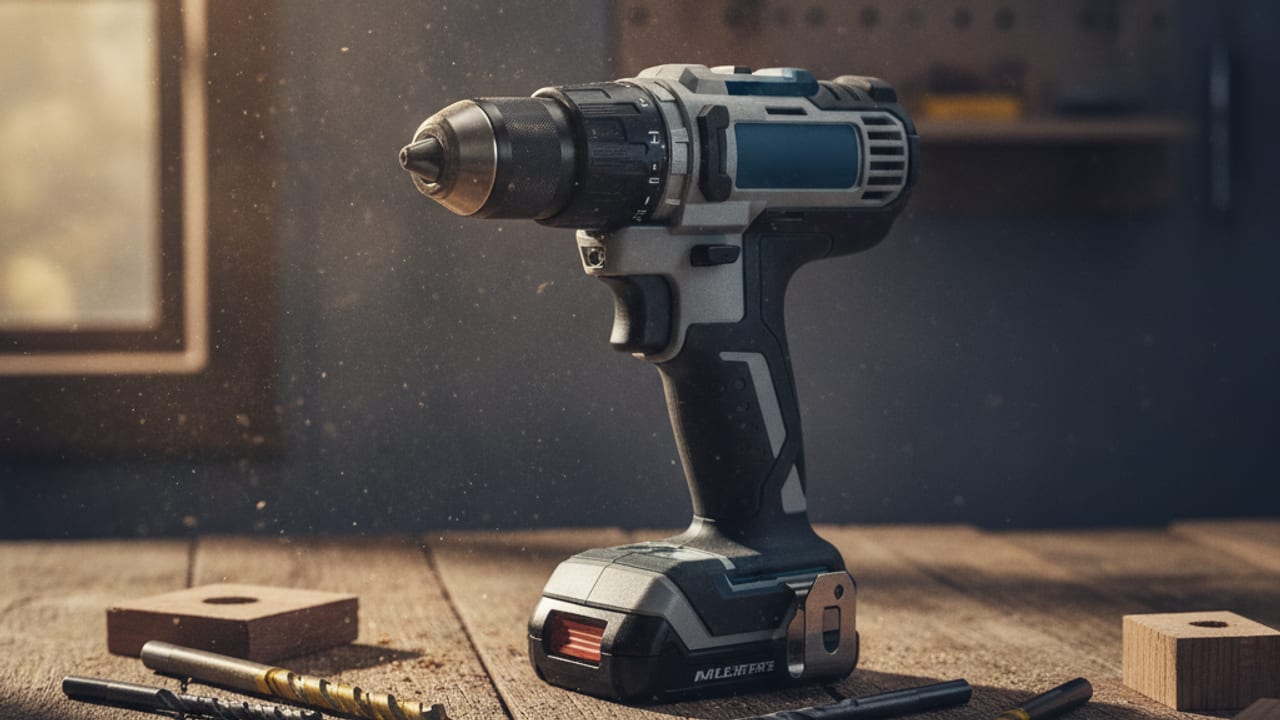
A brushless drill replaces the carbon brushes and commutator of a traditional motor with an electronic controller that switches power to the motor windings directly. Less friction means less heat and less wasted energy, so a brushless drill runs cooler, pulls noticeably more work from each battery charge and lasts longer, because there are no brushes to wear down. That is the entire difference in one paragraph.
The longer answer is worth five minutes of your time, because "brushless" has become the single biggest word on every drill box in the UK, and the price gap between a brushed and brushless version of what looks like the same tool can be £40 or more. Sometimes that gap is worth paying. Sometimes it genuinely is not. This article explains how each motor actually works, what the difference means on a real job, and which type suits the way you use a drill.
How a Brushed Motor Works
The brushed DC motor is a Victorian design that still works brilliantly, which is why it powered almost every drill made before roughly 2010. Inside, the spinning part of the motor (the armature) carries coils of wire that become electromagnets when current flows through them. To keep the armature spinning, the direction of that current has to flip continuously, and the flipping is done mechanically: a segmented copper ring called a commutator rotates with the armature, and two spring loaded carbon blocks, the brushes, press against it and feed power in.
It is simple, cheap to make and robust. But the design has three built in costs:
- Friction. The brushes drag on the commutator every second the motor turns. That drag wastes energy as heat, which is why a hard worked brushed drill gets hot and why some of your battery charge never reaches the chuck.
- Wear. Carbon brushes are sacrificial parts. They grind down over hundreds of hours of use, and when they are gone the motor stops. On older trade tools the brushes were a serviceable part you could swap; on modern DIY tools they usually are not, and the worn tool becomes scrap.
- Sparks. As the commutator segments pass under the brushes, small arcs jump the gap. That arcing eats the commutator surface over time, generates heat, and is why you can often see a faint flicker through the vents of a brushed drill under load.
How a Brushless Motor Works
A brushless motor turns the design inside out. The permanent magnets sit on the spinning rotor, and the copper windings sit still in the motor housing. Because the windings do not move, no brushes are needed to feed them. Instead, a small electronic controller switches current between the windings in sequence, using sensors (or the motor's own electrical feedback) to know exactly where the rotor is at every instant. The magnetic field effectively rotates electronically, and the rotor chases it.
Removing the brushes removes the friction, the arcing and the sacrificial wear parts in one go. The practical results on a job are real, not marketing:
- More runtime per charge. Less energy is lost as heat and drag, so more of the battery goes into turning the chuck. As an honest rule of thumb, expect around a third more work from the same battery compared with an equivalent brushed tool. Manufacturers claim more; a third is a fair real world figure.
- Cooler running and more sustained power. Heat is what forces a drill to ease off or cut out on long runs, for example driving a 150mm auger bit through joists. A brushless motor generates less heat to begin with, so it holds its output for longer.
- Longer motor life. With no brushes to wear out and no commutator to erode, the motor itself will usually outlast the rest of the tool. Bearings and switches become the limiting parts instead.
- Smaller and lighter for the same power. Brushless motors pack more output into less volume, which is a large part of why current compact combi drills are so much shorter than the drills of ten years ago.
- Smarter behaviour. Because a controller is already managing the motor, manufacturers add electronics almost without cost: overload protection that shuts down before the motor cooks, adaptive power modes, soft start, and kickback control on some models that stops the drill when a bit binds.
The one genuine downside is price. The controller, sensors and rotor magnets cost more to make than a brush ring, and the brands know the word sells, so a brushless model typically carries a £30 to £60 premium over its brushed equivalent at the same power class.
Every combi drill in our current top six is brushless, compared honestly across price bands from DIY to full trade.
See the best cordless combi drills for the UKBrushed vs Brushless at a Glance
| Brushed | Brushless | |
|---|---|---|
| How power is switched | Mechanically, via carbon brushes and a commutator | Electronically, via a controller and sensors |
| Runtime per charge | Baseline | Around a third more in real use |
| Heat under load | Higher, output fades on long runs | Lower, holds output longer |
| Motor lifespan | Limited by brush wear | No brushes to wear; motor usually outlasts the tool |
| Size and weight | Larger for the same power | More compact |
| Extras | Rarely any | Overload protection, power modes, kickback control on some |
| Price | Cheaper, common in budget kits | Typically £30 to £60 more at the same class |
When a Brushed Drill Is Still a Sensible Buy
Despite everything above, a brushed drill is not a bad tool, and for some buyers it remains the rational choice.
If you use a drill a few times a year, for flat pack furniture, the odd shelf and a curtain pole, brush wear will simply never catch up with you. A set of brushes is good for hundreds of hours of running time, and at ten minutes of actual trigger time a month you would take decades to wear them out. The battery will age out long before the motor does. In that situation the £40 saved on a brushed model is £40 towards a better battery, a bit set or a decent wall plug assortment, all of which will improve your results more than a fancier motor would.
Brushed motors also dominate the cheapest kits for a reason: they keep a drill, charger and battery under the £60 mark, which brushless rarely manages. For a first toolkit or a student house, that is a fair trade.
When Brushless Pays for Itself
The calculation flips as soon as a drill becomes something you rely on rather than something you own.
Daily or weekly use. For anyone on the tools, or a serious DIYer working through a renovation, runtime and heat stop being spec sheet lines and become time. Around a third more work per charge means fewer trips back to the charger, and one battery doing what one and a half did. Over a renovation that is hours.
Hard drilling. Masonry work, large holes in oak, long screws into sleepers: sustained load is exactly where brushed motors heat up and fade, and where brushless electronics protect the tool rather than letting you cook it. If your jobs lean heavy, brushless is the difference between a drill that keeps pulling and one that smells of hot varnish.
Keeping the tool for years. Because the motor no longer wears in normal use, a good brushless drill's working life is set by its batteries, and batteries can be replaced. Spread the £40 premium over the extra years and it is one of the cheaper upgrades in the toolbox.
Buying into a platform. If you are choosing your first battery platform, it makes little sense to anchor it with dated brushed tools. Every major brand now builds its current mid range and trade lines around brushless motors, and the resale market values them accordingly.
Ready to choose? We compare six brushless combi drills honestly, from budget DIY to trade flagships, with typical UK price bands.
Read our best cordless combi drills guideFrequently Asked Questions
Is brushless always more powerful than brushed?
No. Power depends on the whole design, and a large brushed motor can out muscle a small brushless one. What is true is that at the same size and price class, the brushless version usually delivers more usable output, holds it for longer under load, and does it with less battery. Compare torque figures and, more importantly, what the drill is rated to do, rather than assuming the word brushless settles it.
Do brushless drills need any maintenance?
Almost none on the motor itself, because there are no brushes to service or replace. The parts that still age are the same as on any cordless tool: the battery cells, the chuck, the switch and the gearbox grease. Keep the vents clear of dust, do not store batteries flat or in a freezing van, and a decent brushless drill should give many years of work.
Can I put a brushless tool on my existing batteries?
Usually, yes. Brushless and brushed tools from the same brand share the same battery platform, so an 18V battery that ran your old brushed drill will run the brushless replacement. This is exactly why buying the bare brushless tool is often the smart upgrade path: you pay for the better motor and keep the batteries and charger you already own.
Why are brushless drills more expensive?
The motor needs permanent magnets on the rotor, an electronic controller and position sensing, all of which cost more to manufacture than a brush ring and commutator. Brands also know the word carries a premium. The gap is narrowing every year as controllers get cheaper, and entry level brushless models now start at prices that only bought brushed tools a few years ago.