Heated Airer Running Costs: What They Really Cost Per Load
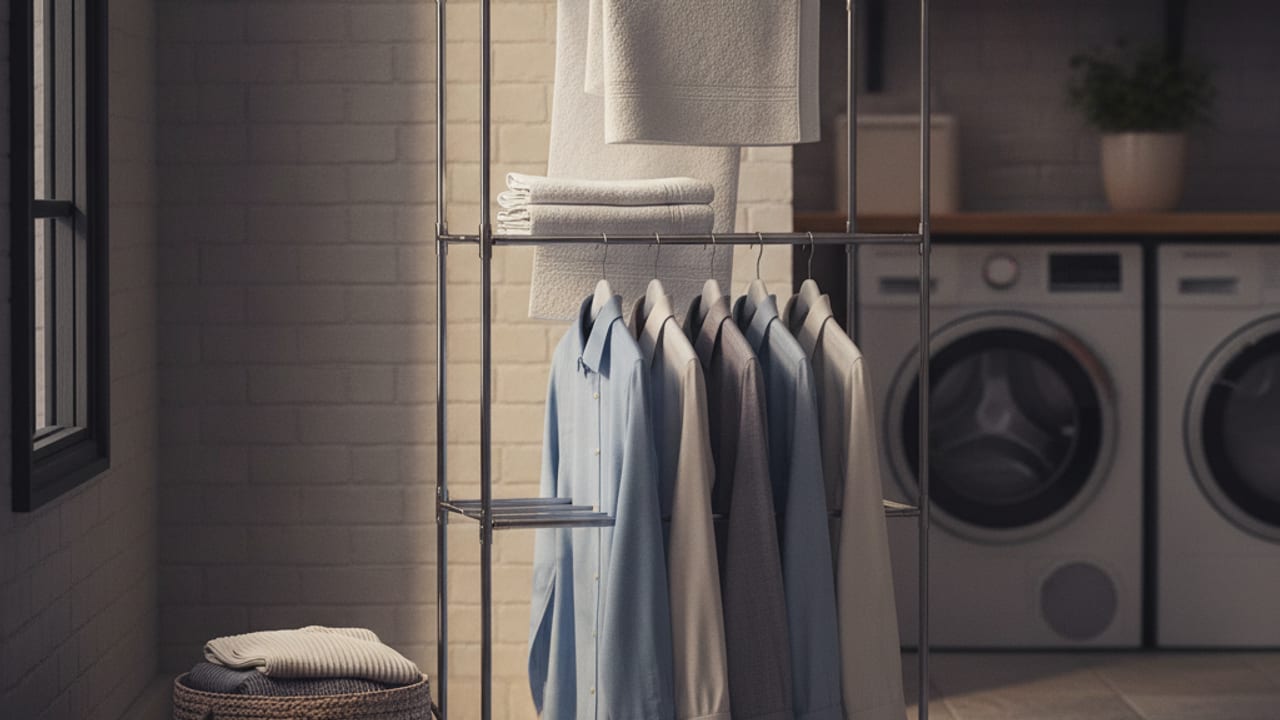
A typical 300 watt heated airer costs around 8p an hour to run at roughly 27p per kilowatt hour, which is about where the UK price cap sits in 2026. A full load drying over four to eight hours therefore costs somewhere around 32p to 65p, against roughly 70p to over £1 for a typical condenser tumble dryer cycle.
Those are the honest headline numbers, and the rest of this article shows the working, because the per hour figure that sells heated airers is not the same thing as the per load figure that actually hits your bill. We will also cover the tricks that shorten drying time, and the condensation catch that nobody mentions on the box.
The Maths, Shown Properly
Running cost is wattage multiplied by hours multiplied by your electricity rate. A common three tier heated airer draws around 300 watts, which is 0.3 kilowatt hours for every hour it runs. Smaller two tier models sit nearer 220 to 260 watts, and large winged models can reach 400 watts.
At around 27p per kilowatt hour:
- 0.3 kWh x 27p = around 8p per hour for a typical 300W airer
- Four hour session: around 1.2 kWh, roughly 32p
- Eight hour overnight session: around 2.4 kWh, roughly 65p
Your exact rate will differ, especially on a time of use tariff, so treat every figure here as approximate. The shape of the maths does not change though: the airer is cheap per hour, and the real question is how many hours a load needs, which depends on the fabric, the room, how well the machine spun the load and whether you use a cover.
Heated Airer vs Tumble Dryer, Per Load
| Method | Approx energy per load | Approx cost at ~27p/kWh |
|---|---|---|
| Heated airer, uncovered (4 to 8 hours) | 1.2 to 2.4 kWh | Around 32p to 65p |
| Heated airer with fitted cover | Usually less, drying finishes sooner | Often nearer the bottom of the range |
| Condenser or vented tumble dryer | 2.5 to 4 kWh | Around 70p to £1.10, sometimes more |
| Heat pump tumble dryer | 1 to 2 kWh | Around 27p to 55p |
Three honest observations from that table. First, against a standard condenser or vented dryer, the airer wins clearly on cost per load as well as purchase price. Second, a modern heat pump dryer is the airer's real rival on running cost, overlapping the same per load range while finishing in under two hours; its drawback is a much higher purchase price. Third, the gap per load is pennies, so the airer's biggest financial argument is actually the machine itself: a decent heated airer costs a small fraction of any dryer, needs no plumbing or venting, and cannot shrink your jumpers.
There is also the load size caveat: a big family wash can exceed what one airer holds, and splitting it across two sessions doubles the hours. If you wash daily for a household of five, a heat pump dryer earns its keep; if you run a few loads a week, the airer maths is hard to beat.
We compared the heated airers actually worth buying in the UK, including which covers and tiers make the biggest difference.
See the best heated airers UKFive Ways to Cut the Cost Per Load
- Use a cover. This is the single biggest upgrade. A fitted cover traps the warm air around the clothes instead of letting it drift into the room, cutting drying time noticeably for the same wattage. If your airer did not come with one, buying the matching cover is the best money you will spend on it.
- Spin faster before you hang. An extra spin cycle costs a penny or two and removes water the airer would otherwise spend hours evaporating. Going from a light spin to your machine's maximum can take an hour or more off drying time.
- Space the load out. Overlapping garments create damp pockets that never quite finish. One layer per rail, heavier items on the warmest rails nearest the frame, and thin items on top.
- Time it to your tariff. On a time of use tariff, an overnight run in the cheap window can roughly halve the effective cost per load. The airer's slowness suddenly becomes a feature.
- Pair it with a dehumidifier in winter. A dehumidifier on laundry mode next to the airer pulls the moisture out of the air, speeds the drying, and deals with the problem in the next section at the same time.
The Condensation Catch
Every litre of water that leaves your washing goes somewhere, and with an airer that somewhere is the air in your home. A single load can release well over a litre of moisture. In a warm, ventilated room that disperses harmlessly; in a cold winter room with the windows shut it reappears as streaming glass, damp patches in cold corners and, eventually, mould.
The fixes are simple: dry in a room where you can crack a window or run an extractor, keep the airer away from cold external walls, and in the depths of winter run a dehumidifier alongside. The dehumidifier adds a few pence per hour, still leaves you well under dryer costs in most cases, and protects the fabric of the house. Draping washing over radiators, for comparison, does the same moisture damage while also making your boiler work harder, which is why it is the most expensive "cheap" drying method in Britain.
Ready to buy? Our guide picks the best heated airers for UK homes by size, wattage and build, with honest trade offs for each.
Read our best heated airers UK guideFrequently Asked Questions
Is it cheaper to run a heated airer or a tumble dryer?
Per load, a heated airer at around 32p to 65p usually beats a condenser or vented dryer at around 70p to £1.10, using roughly 27p per kilowatt hour as the reference rate. A heat pump dryer overlaps the airer's range per load but costs far more to buy. The airer also wins on purchase price and gentleness on clothes; the dryer wins on speed and capacity.
How long does a heated airer take to dry clothes?
Typically four to eight hours for a well spun load, depending on fabric weight, room temperature and whether you use a cover. Thin synthetics can finish in two to three hours; jeans, towels and hoodies sit at the long end. A cover and a maximum spin beforehand shorten it more than anything else.
Can I leave a heated airer on overnight?
The rails on quality models run warm rather than hot, and many buyers do run them overnight, ideally with a cover on and the airer clear of curtains and bedding. Check your model's instructions, and if it has a timer, use it so the airer switches off once the typical drying window has passed rather than running to breakfast for nothing.
Do heated airers cause damp and mould?
The airer itself does not, but the litre plus of moisture leaving each load can, if it has nowhere to go. Ventilate the room, keep washing off cold external walls, and consider a dehumidifier alongside in winter. Managed that way, indoor drying is perfectly safe for the house.