Compressor vs Desiccant Dehumidifiers: Which Suits UK Homes?
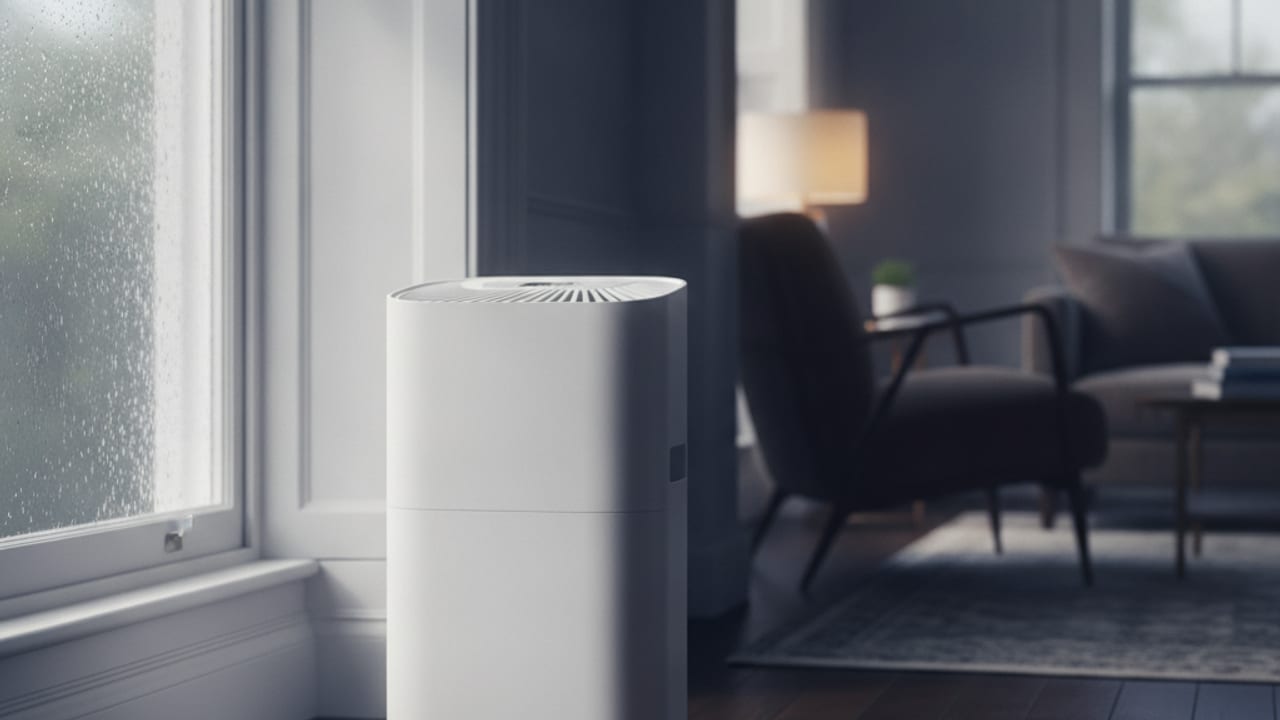
The short answer: buy a compressor dehumidifier for heated living spaces, and a desiccant for cold rooms like garages, conservatories, caravans and unheated utility rooms. Compressor machines are cheaper to run but lose effectiveness below around 15 degrees; desiccant machines keep extracting in the cold but draw two to three times the power while doing it.
Temperature is the whole decision, which is why so many people buy the wrong machine: the specs pages talk about litres per day and tank sizes and barely mention that the two technologies behave completely differently once a British winter arrives. Here is how each type works, what they cost to run at current electricity prices, and which one fits each room of a UK home.
How Each Type Actually Works
A compressor (also called refrigerant) dehumidifier works like a fridge for air. A pump compresses refrigerant to chill a set of coils, a fan pulls room air across them, and moisture condenses on the cold surface and drips into the tank. It is a mature, efficient technology, and it is what most machines sold for UK living spaces use.
A desiccant dehumidifier contains a slowly rotating wheel coated in an absorbent material, similar in principle to the silica gel sachets that arrive in parcels. Air passes through the wheel, which soaks up the moisture; a heating element then warms a section of the wheel to drive the moisture off into the tank and regenerate the material. No refrigerant, no compressor, just a wheel, a fan and a heater.
That heater is the crucial detail. It makes desiccant machines hungrier for electricity, but it also means they blow out air noticeably warmer than the room, and it means their extraction has nothing to do with how cold the air is.
Temperature: The Factor That Decides Everything
A compressor machine works by making its coils colder than the air. As the room temperature falls toward 10 to 15 degrees, that gap shrinks, extraction drops away sharply, and below that the coils spend much of their time iced up while the machine pauses to defrost. The litres per day figure on the box was measured in warm, humid lab conditions, often 30 degrees and 80 percent humidity, which is why a "20 litre" machine may collect only a few litres a day in a real UK home even when working well.
A desiccant machine does not care. Its absorbent wheel extracts almost as effectively at 3 degrees as at 20, which is precisely the range an unheated UK garage, conservatory or holiday caravan lives in from October to April. If the damp problem is in a space you do not heat, a compressor machine will disappoint you in exactly the months you need it most, and a desiccant is the right tool.
In a heated living space the logic flips. The room sits at 18 to 21 degrees, the compressor machine works efficiently there, and the desiccant's power draw becomes a running cost penalty you are paying for cold weather performance you do not need.
We compared six dehumidifiers worth buying for UK damp, condensation and laundry drying, including both compressor and desiccant picks.
See the best dehumidifiers UKRunning Costs at Around 27p per kWh
Using around 27p per kilowatt hour as a reference for the 2026 UK price cap, and treating all figures as approximate:
| Type | Typical power draw | Approx cost per hour | 8 hours |
|---|---|---|---|
| Compressor (typical 20L class) | 200 to 300W | Around 5p to 8p | Around 45p to 65p |
| Desiccant (typical 8L class) | 600 to 700W | Around 16p to 19p | Around £1.30 to £1.50 |
Two honest caveats stop this table being misleading. First, a machine with a humidistat does not run constantly: set a target of around 55 percent humidity and it cycles on only when needed, so real daily costs are usually well below the always-on figure. Second, the desiccant's extra wattage is not entirely wasted, because it comes out as warm air. In a cold room in winter that gentle heating is genuinely useful; in an already heated room in summer it is just an expensive fan heater you did not ask for.
The efficiency comparison that matters is litres extracted per kilowatt hour in your conditions, and there the rule holds: compressor wins in warm rooms, desiccant wins in cold ones.
Noise, Weight and Laundry Drying
- Noise character. Compressor machines add a hum and occasional clicks from the pump on top of fan noise; desiccants are fan-only, which many people find easier to sleep near even at similar decibel figures. For bedrooms, check the quoted low-fan decibel level either way, and look for machines in the low 30s dB range on their quiet setting.
- Weight and bulk. Desiccants have no compressor or refrigerant circuit, so they are typically several kilos lighter and easier to carry upstairs or out to a caravan. Compressor machines in the 20 litre class are more of a two hands up the stairs proposition.
- Laundry drying. Both types do it well, and it is one of the best reasons to own either. A laundry mode runs the fan and extraction continuously near a clothes airer, pulling the moisture out of the room as it leaves the washing. The desiccant's warm outlet air gives it a slight edge in a cold utility room; in a heated room the compressor does the same job for less electricity.
Which Should You Buy?
- Condensation and damp in a heated house: compressor. It is the efficient choice at living room temperatures and costs pennies per hour to cycle with a humidistat.
- Garage, workshop, conservatory, caravan, boat, unheated spare room: desiccant. It keeps working in the cold, it is lighter to carry, and the warm outlet air is a bonus in those spaces.
- Drying washing indoors all winter: either works; pick based on the room it will live in, and treat a laundry mode and a decent tank size as essentials.
- Drying out after a leak or new plaster: a high capacity compressor machine, run warm. Trade drying is about maximum litres per day, and big compressor units deliver that most economically in a heated space.
Ready to choose a machine? Our guide covers the best compressor and desiccant models for UK homes, with honest trade offs for each.
Read our best dehumidifiers UK guideFrequently Asked Questions
Why does my 20 litre dehumidifier only collect a few litres a day?
The headline figure was measured in hot, very humid lab conditions that UK homes never reach. In a typical British room a healthy 20 litre compressor machine collecting several litres a day is working exactly as it should. Judge it by the humidity reading falling and the windows staying clear, not by the tank filling to match the box.
Will a desiccant dehumidifier heat my room?
Gently, yes. The regeneration heater means the outlet air is noticeably warmer than the room, typically raising a small closed space by a few degrees over a long run. In a cold garage or caravan that is a genuine benefit; in a heated living room in summer it is unwelcome, which is another reason compressors suit warm spaces.
Should I just run one machine and move it around the house?
You can, and for a whole house condensation problem a single compressor unit on a landing with doors open does useful work. But if your problem spans a warm house and a cold garage, one machine cannot suit both environments well, and two cheaper machines matched to their rooms usually beat one expensive compromise.
Compressor or desiccant for drying out a damp basement?
It depends on the temperature down there. A heated or semi-heated basement above roughly 15 degrees suits a compressor; a cold cellar suits a desiccant. For serious standing damp, fix the source of the water first, because no dehumidifier outruns a leak or rising damp indefinitely.