Are Walking Pads Worth It? An Honest UK Look
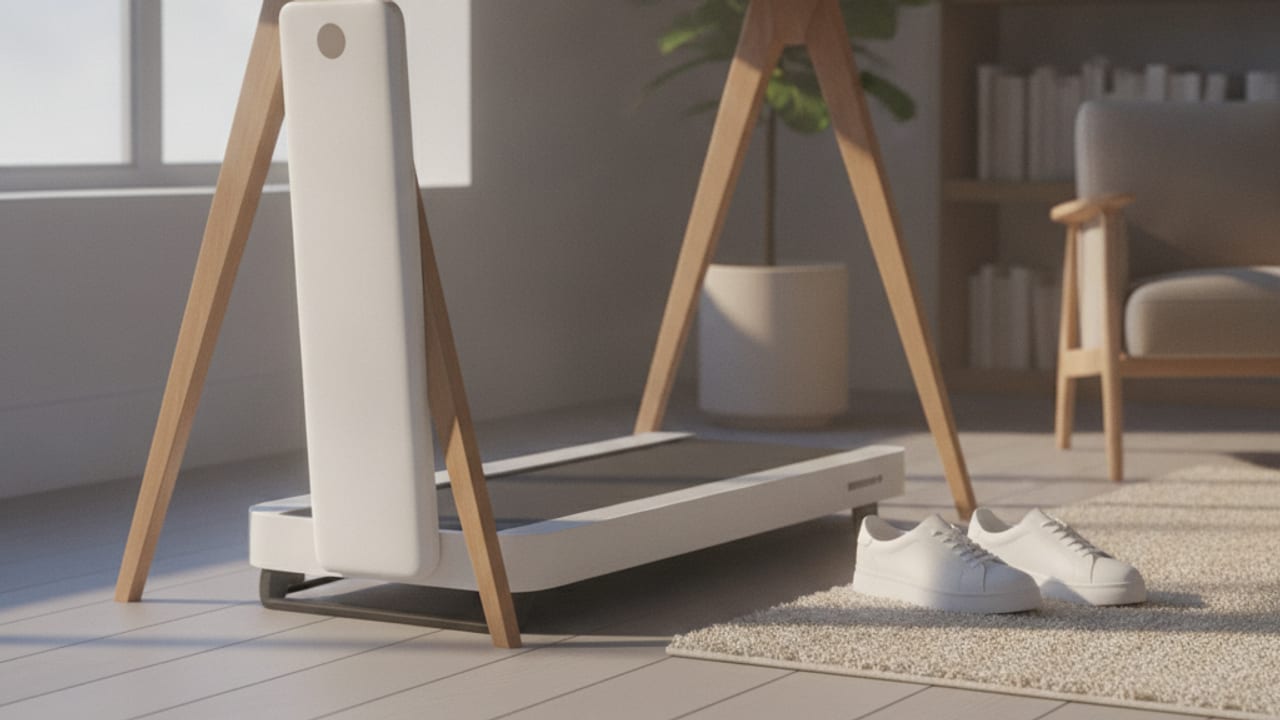
For people who work from home, sit most of the day and have somewhere to store a slim machine, a walking pad is genuinely worth it: it turns dead desk hours into thousands of steps. For runners, for anyone hoping a gadget will create motivation, or for cramped homes with thin floors, the honest answer is no.
Walking pads have gone from curiosity to fixture in UK home offices, with sensible models sitting around £150 to £400. That is enough money to deserve a proper look at what they actually deliver, what the marketing skips, and who ends up using theirs a year later versus storing a very expensive draught excluder under the bed.
What a Walking Pad Is and Is Not
A walking pad is a slim, motorised belt without the tall frame and console of a treadmill. Most are around 12 to 15 centimetres high, fold flat or in half, and top out around 6 kilometres per hour, a brisk walk. Some hybrid models add a folding handrail that unlocks jogging speeds, and full folding treadmills sit above those again.
The design intent is specific: steady, gentle walking while you do something else, usually working at a standing desk. It is not a running machine, it usually has no incline, and the motor is sized for walking pace. Judge it as a movement tool for the working day, not as gym equipment, and the value question gets much clearer.
The Honest Case For One
- It attacks the real problem. The move to home working deleted the commute, the walk to the meeting room and the trip to buy lunch. Many home workers now clock a strikingly low daily step count without noticing. A pad under the desk restores movement inside hours that were going to be sedentary anyway, which is exactly why it gets used when gym memberships do not.
- The volume adds up quickly. Walking at 3 to 4 kilometres per hour during calls and routine work, an hour or two a day is easy to accumulate. That is comfortably several thousand extra steps daily, and regular brisk walking sits at the heart of the NHS guidance of at least 150 minutes of moderate activity a week. A pad makes that target almost incidental.
- It suits UK homes. Few of us have a spare room for a treadmill. A flat machine that slides under a sofa or bed when you finish is the difference between owning one and not.
- Running costs are trivial. Walking-pace draw is modest, and at around 27p per kilowatt hour an hour of use costs pennies. Electricity is not a reason to hesitate.
The Honest Case Against
- It will not replace exercise. Gentle walking is superb for health but it is low intensity. If your goal is fitness, strength or serious calorie burn, a walking pad complements training; it does not substitute for it. Anyone buying one as a weight loss machine on its own is likely to be disappointed.
- Typing while walking has a learning curve. Most people can handle email, calls and reading at 3 kilometres per hour within a week or two. Precise work, detailed spreadsheets or design tends to happen standing still. If your job is all precision work, you will use the pad less than you imagine.
- Noise and neighbours. A decent pad at walking pace is quiet enough for calls, but footfall transmits through floors. In an upstairs flat with neighbours below, belt plus footsteps may be an issue; a rubber mat underneath helps, but it is worth thinking about before buying.
- Cheap pads are cheap for a reason. At the very bottom of the market, weak motors strain under heavier users, belts are short for taller strides, and support when something fails can be minimal. Weight capacity and warranty are the two specs that separate a machine that lasts from one that does not.
- You need a standing desk to work while walking. Without a desk at the right height the pad becomes a walk-while-watching-TV machine, which some people love, but it changes the value calculation. Factor the desk into the budget if you do not own one.
Decided a walking pad fits your setup? We compare the UK models actually worth the money.
See our best walking pads UK guideWho Gets Their Money's Worth
Across owner experiences, the people still using a walking pad a year on share a pattern. They work from home at least a few days a week, they already had, or bought, a standing desk, and they treat the pad as part of the workday rather than a workout to schedule. Walking happens during meetings and admin, automatically, which is precisely why it sticks where exercise plans fail: it costs no extra time.
The people whose pads gather dust also share a pattern. They bought the cheapest machine and found it flimsy or loud; they hoped the purchase itself would generate motivation for exercise they did not otherwise want to do; or they had nowhere sensible to leave it, and a machine that has to be fetched and assembled each time simply stops being used.
What to Spend, Honestly
The sweet spot for a pure under-desk pad from an established brand sits around £200 to £350 in the UK, which typically buys a motor that holds pace under load, a belt long enough for a natural stride, sensible weight capacity and a machine quiet enough for video calls. Hybrid walk-and-run models and folding treadmills with incline cost more and make sense only if you will genuinely run; buying running capability "just in case" is the most common way to overspend in this category.
One more honest note: a walking pad competes with a £0 alternative, going outside. If your day allows real walks and you take them, a pad adds less. Its value is highest for people whose diaries, weather or caring responsibilities keep them at the desk through daylight hours, which in a British winter describes a lot of home workers.
Ready to choose? Our UK guide compares walking pads and hybrids with honest trade-offs at each price.
Compare the best walking pads UKFrequently Asked Questions
Can you actually work while walking on one?
Yes, with a short adjustment period. Calls, email, reading and most routine tasks are comfortable at 2.5 to 4 kilometres per hour within a couple of weeks. Fine motor work like detailed design is harder; most owners pause the belt for those tasks and restart it afterwards.
Are walking pads bad for your knees?
Walking is among the lowest impact activities there is, and pads are used at gentle pace, so for most people they are easier on joints than running on pavement. The decks are firmer than a cushioned treadmill, so if you have an existing knee or hip condition, build up time gradually and get advice if pain appears.
Will one annoy the neighbours in a flat?
The motor itself is quiet at walking pace; the bigger factor is footfall through the floor. On a ground floor or concrete slab it is rarely an issue. In an upstairs flat with wooden floors, a thick rubber equipment mat reduces transmission considerably, but a cautious buyer in that situation might test tolerance with a short daily window first.
Walking pad or standing desk first?
Standing desk first. It changes posture all day, works with or without a pad, and a pad without a desk at the right height limits you to walking without working. Once the desk is in place, the pad is the natural second step if you want movement as well as posture change.